Saturday, January 14, 2006

Pristine

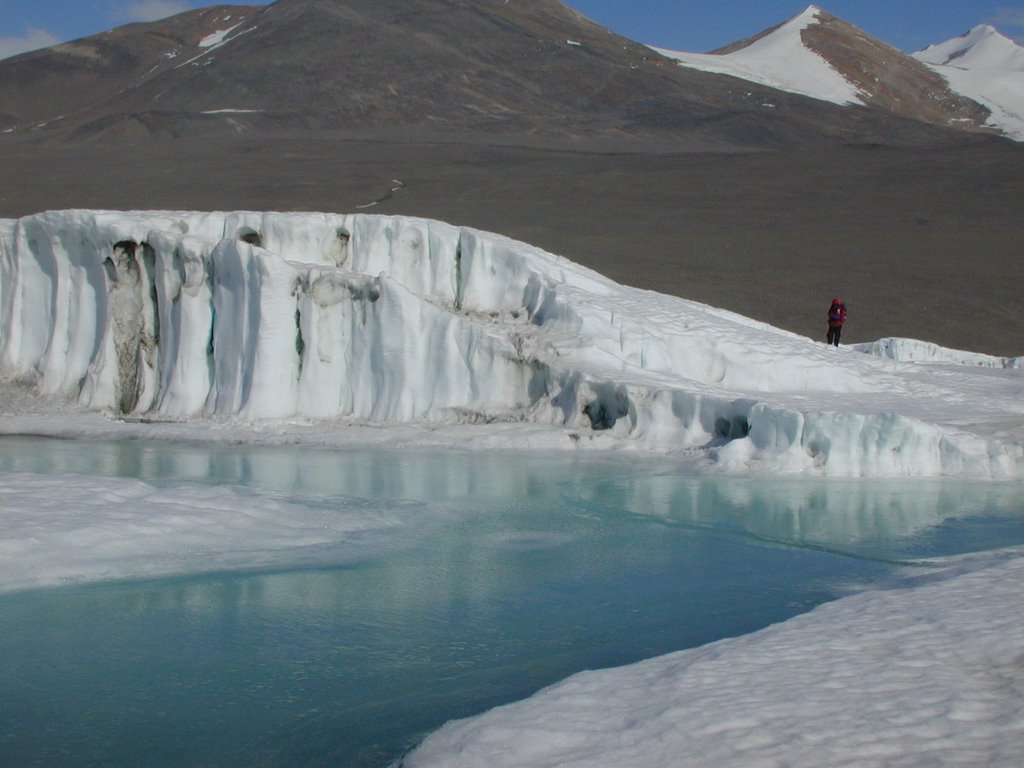
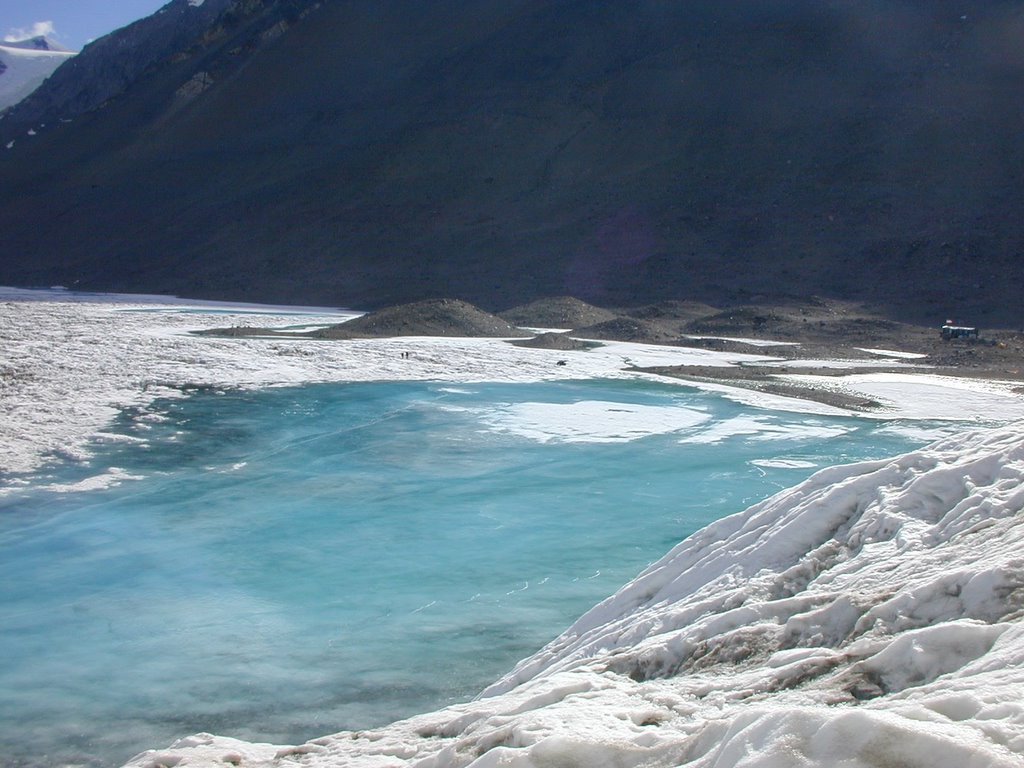
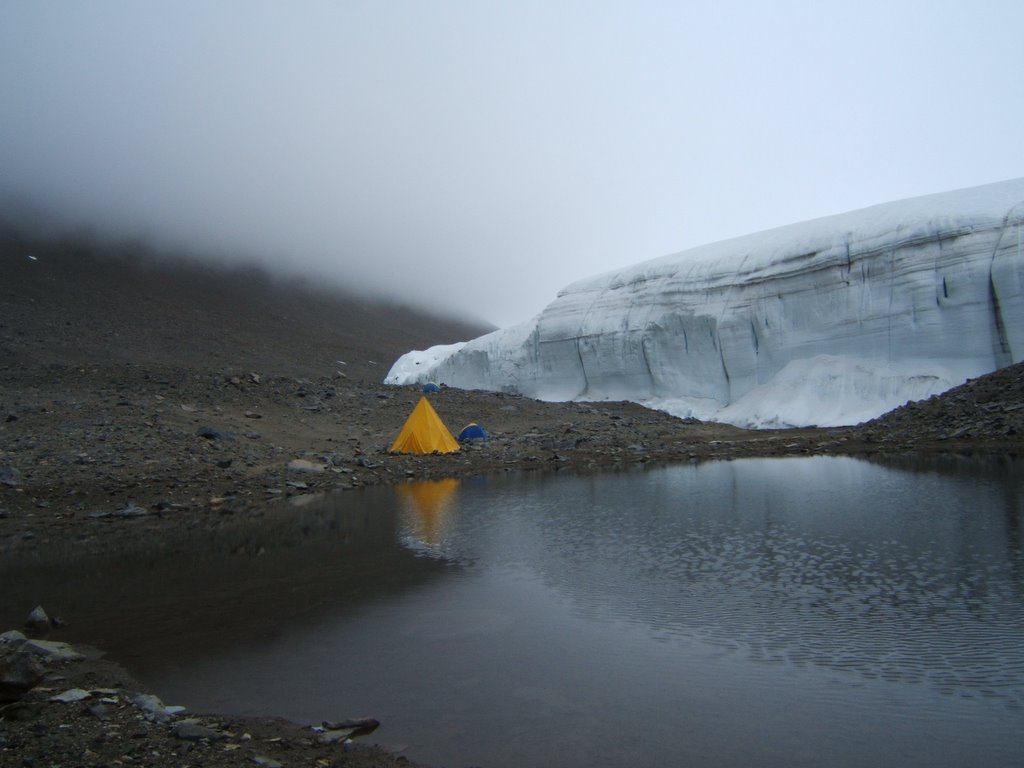
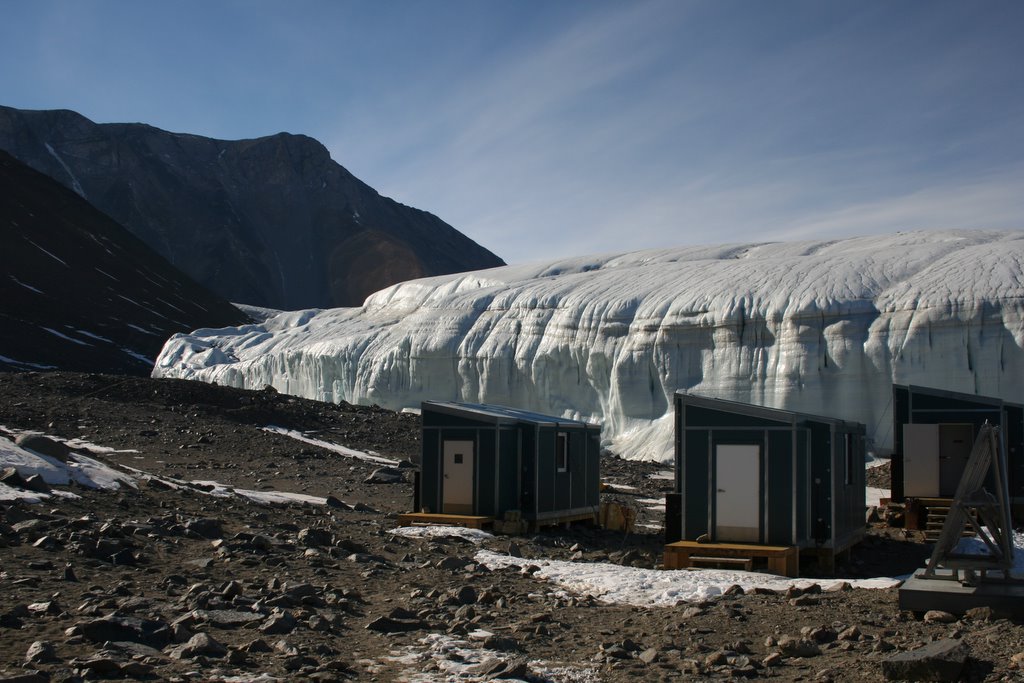
Today is my last full day in the Taylor Valley. Tomorrow I will be heading to the other side of the Canada Glacier (Lake Fryxell camp pictured), and then back to McMurdo Station. It is Sunday- shower day again! And the camp is quiet except for me and the metal sculpturist Gabriel, who are busy waking up to the computer and coffee. (He seeks to be one with the inner spaces of crevasses---although I'm not sure if he will actually be able to see one up close, as this is very technical). He is intense in every sense--- he just sneezed--- I said bless you and he said "it seems my metabolism is just waking up and demanding some oxygen" At any rate, although he hasn't visited crevasses per se, he has been able to explore the safer areas at the bottom of the Canada Glacier, and look and the unusual cliffs.

I wish him well, but, I will definitely go on a solo hike today (with a radio and a location written on the check out board). He will most likely head with Liz and Hassan to the Suess Glacier where they will measure the mass loss on ablation stakes. It is important that I take my thoughts with me from the valley- I fear that if I go hiking with too much talk, the magic will sublimate too quickly.

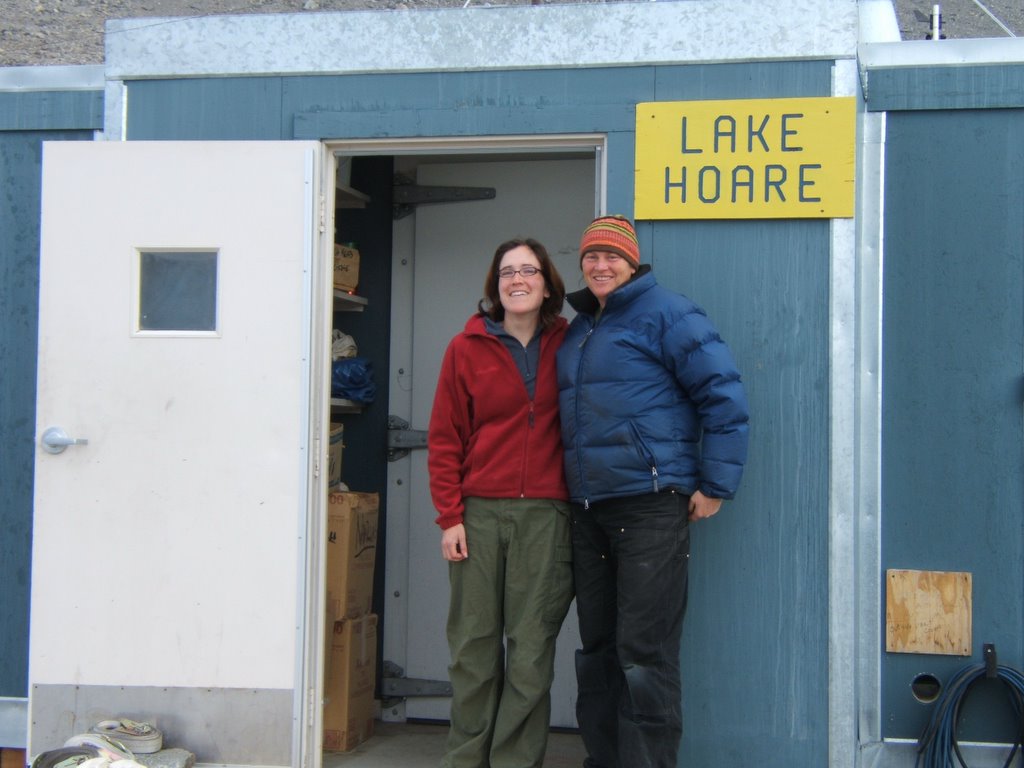
This morning drinking strong coffee, it is much like home. Although, here we sort our garbage into various bags, lab waste, burnables, food waste, light metal, construction waste, cardboard, glass, and as we hike we collect our pee in bottles as to not alter the ecosystem. Other human waste is ignited in the rocket toilets, that Rae and Heidi must diligently flame- to reduce into ashes, making a lighter sling-load for the helicopter pilots. Every trace of us is carried off the continent, making this trip expensive--- and the fuel costs enormous. That is the difficult part. Trying to understand the effects of the industrialized world on remote places, while burning more fuel than I would biking to and from school at home. We must do our best. At Lake Hoare Camp, we use solar panels for all of our energy (much more environmentally friendly than fossil fuel burning at McMurdo Station).
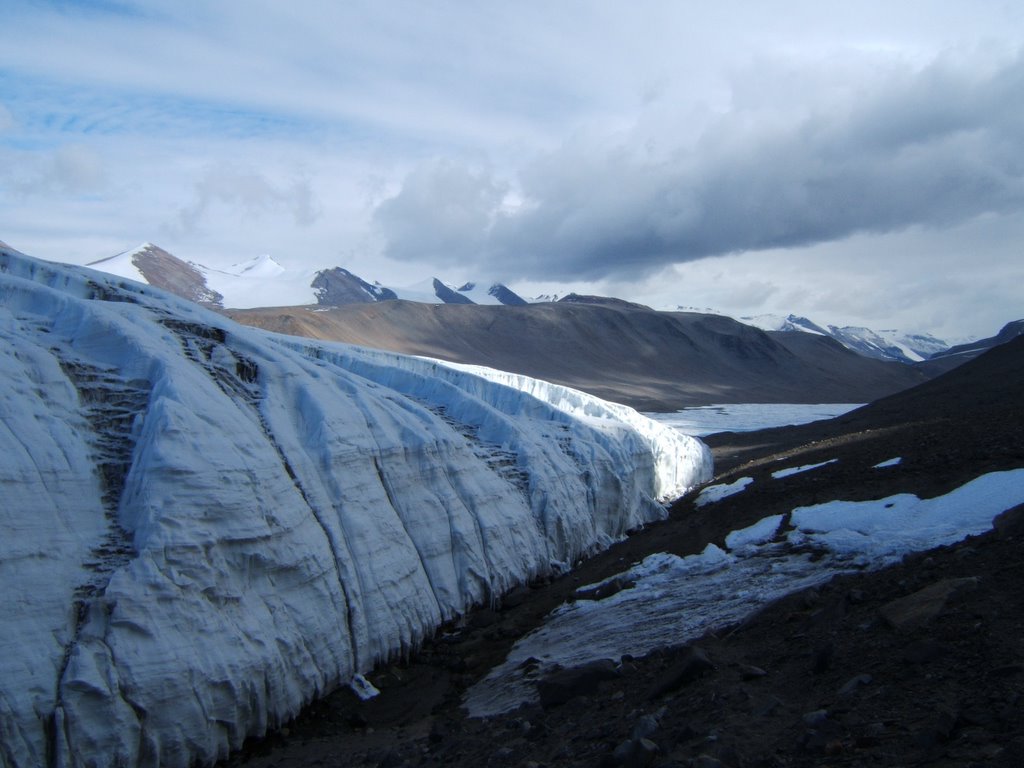

Yesterday, Heidi and I sampled the top western ablation area on the Canada Glacier- I tried to take a clean sample from a cryoconite hole- and it took much effort to find a good sampling location, as many of the holes were beginning to shut down and freeze through. The helicopter flew overhead once, and we laughed, imagining we were in glacier camo--- as the still white suits against the white glacier must make us nearly invisible from overhead. I filtered the last of my filterable samples (I will filter the metals at home, the lab isn't clean enough here.)

Before we spent the afternoon on ice, we had a visit from the Science branch of the House Appropriations Committee- that is in charge of determining how US government funding for research is divided. Also on that flight was Patrick Leahy the Director of the USGS. He was on the committee that put together NAWQA (the National Water Quality Asssessment Program). I worked as an undergrad for the Wisconsin NAWQA Program--- He saw our field lab, and laughed when I mentioned it was similar to the NAWQA Bread Truck (A huge lab on wheels, that allows samples to be safely stored from site to site). Patrick Leahy was also excited to hear about the LTER (Long Term Ecological Research) that we were working on because he favors getting to know a site well. The LTER is much like NAWQA with a focus on collecting long term data sets. We both got pictures on our cameras to show our friends at the USGS (he lent me his hat--- must be the day before shower day:)
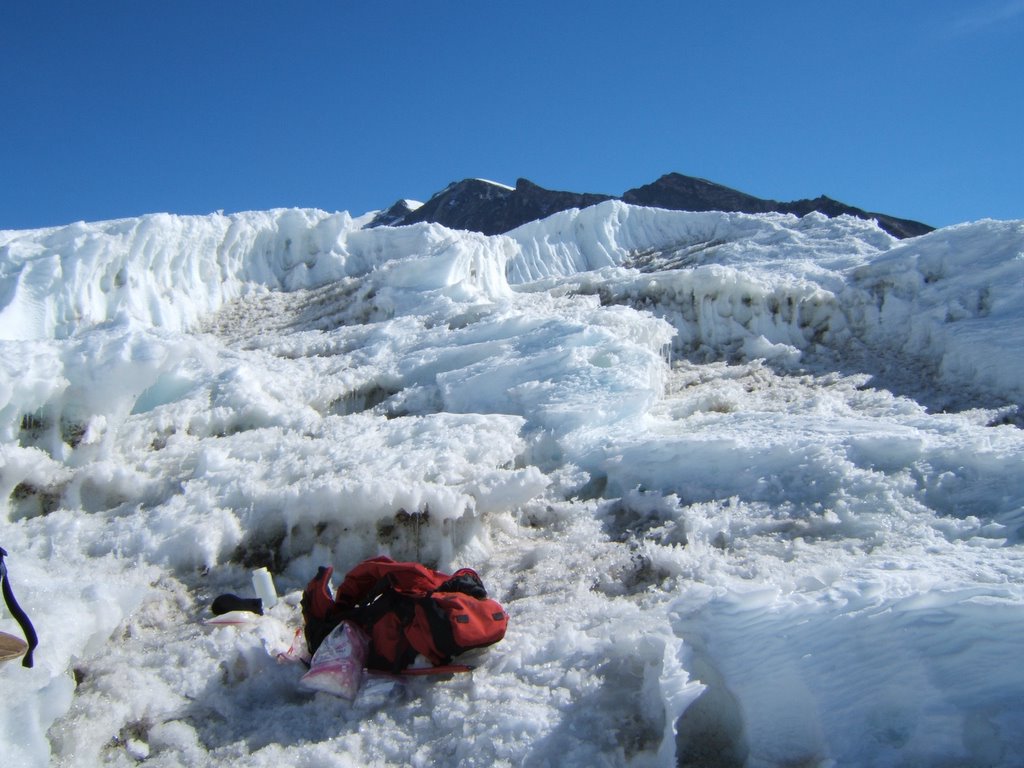
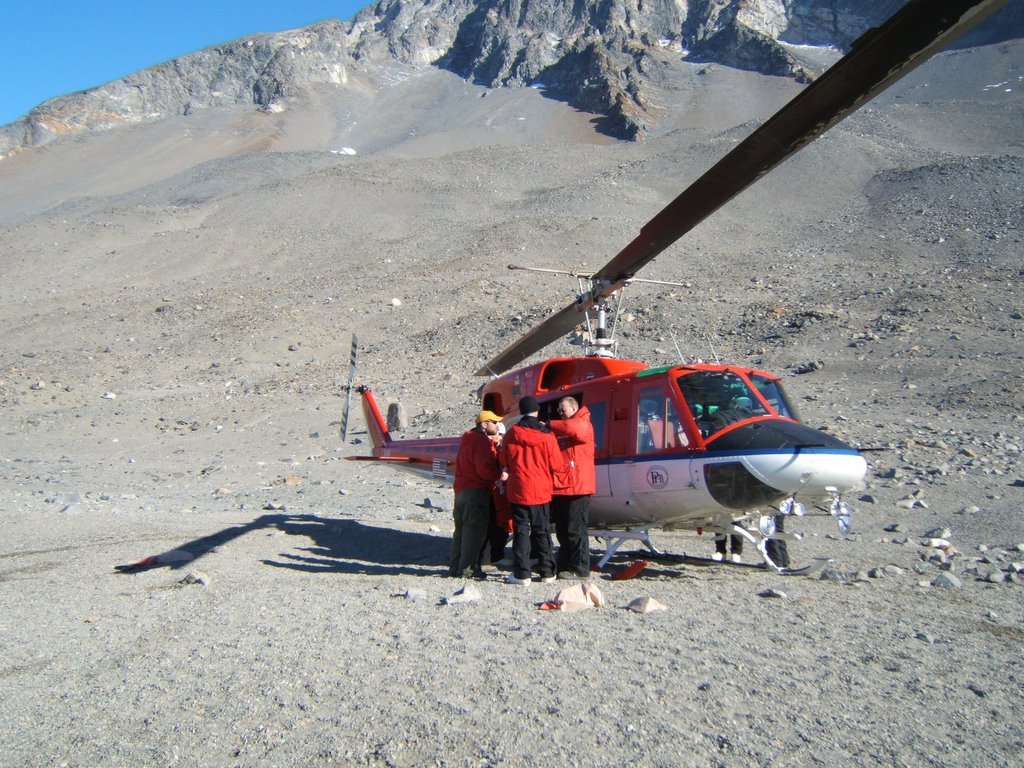
Hassan and I spoke about the stream gauges, met stations, ecosystems and geochemistry of the Taylor Valley to give the Committee and Patrick Leahy and overview of the MCM LTER. We all answered questions, and Rae showed them the facilities before they flew to Wright Valley to meet Dr. Diane McKnight and the stream team at the Onyx River Stream Gauge just north of us through the Asgard Range. I'm sure they had a beautiful flight.

It is ten now, so I am going to pack up and head for the hills. I must take these sights in--- It is now, when the science is done, that I feel the magnitude of the mountains surrounding me. The wide bowl that cups me, a mote in this everlasting- ever-changing valley.

Friday, January 13, 2006

Camp and Crampons


Pictured is part of the inside of Lake Hoare- this shows about 1/5 of the main camp that includes the kitchen, radio area (shown), and computer area (3 computers connect us to the outside world).

We have 1 cubby per person to store our personal effects in- we keep everything else in our tents where we sleep. (Fortunately, we do not have to share tents.) We also try to hold onto one mug (dangling from the ceiling) for a day to lower the amount of grey (dirty water) we produce washing dishes.

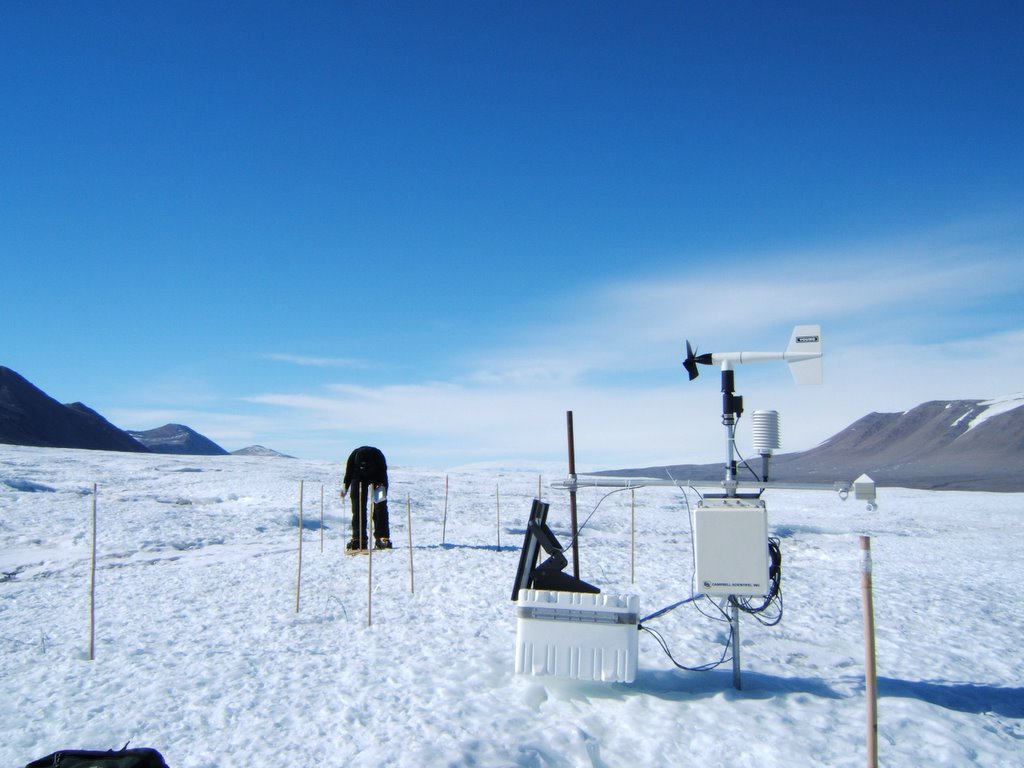
Yesterday morning we didn't head up the glacier until 10 am. Heidi wasn't feeling well, so Rae hiked up with us (Hassan, Liz Bagshaw and me). Our mission- lowering the met station on the Upper Canada Glacier- because in 4 or 5 years its legs have melted out--- (wood legs are drilled into the glacier and the met station is set on top, over time the glacier losses mass via sublimation and the wooden legs are exposed, leaving the met station well above our heads- we reset the station on new drilled in legs). This required hammering and ice axing the old wooden pedastals out from the ice that they are frozen into, and carefully lowering the met station to the ice surface to reset new legs. The lower met station is pictured in this near surface position--- you can see what looks like an airplane with a fan on its snout- that instrument is used to determine wind direction and spped. Liz is measuring from the top of the stakes to the surface of the glacier to determine how much of the surface has disappeared (ablated) during the summer season

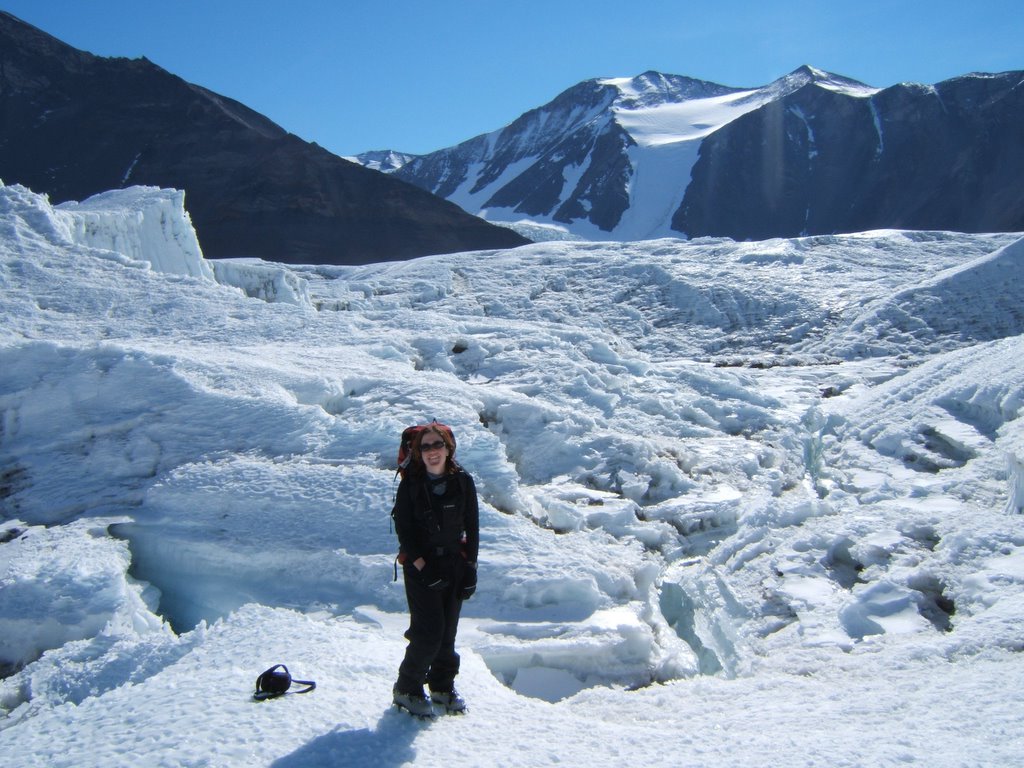
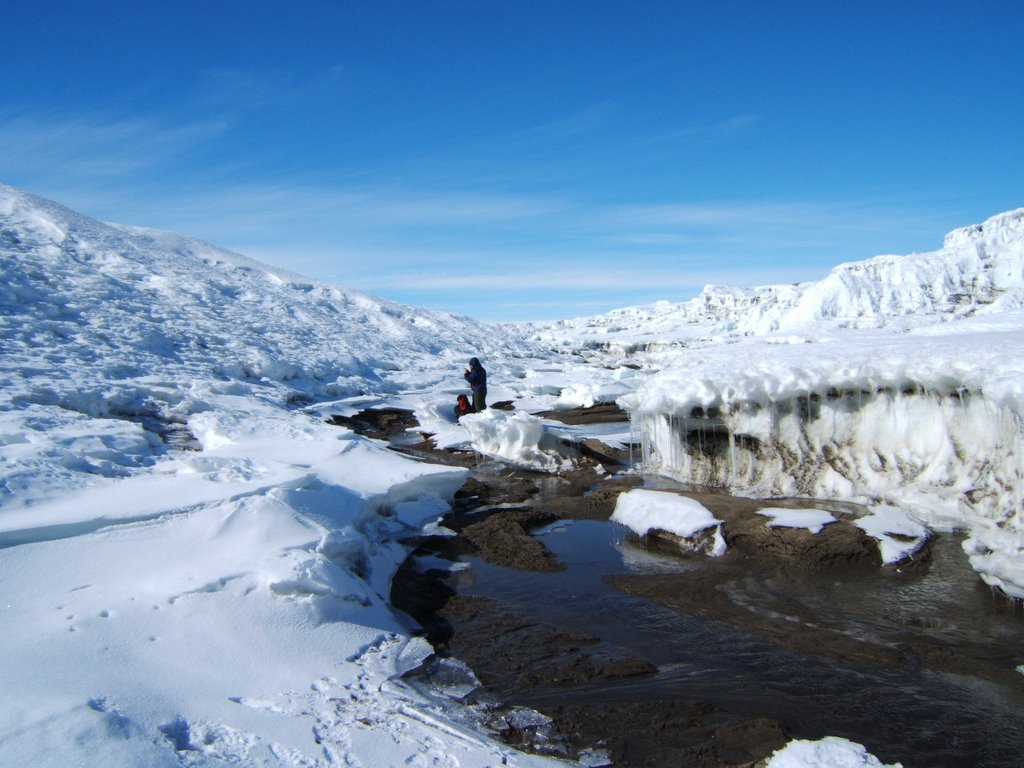
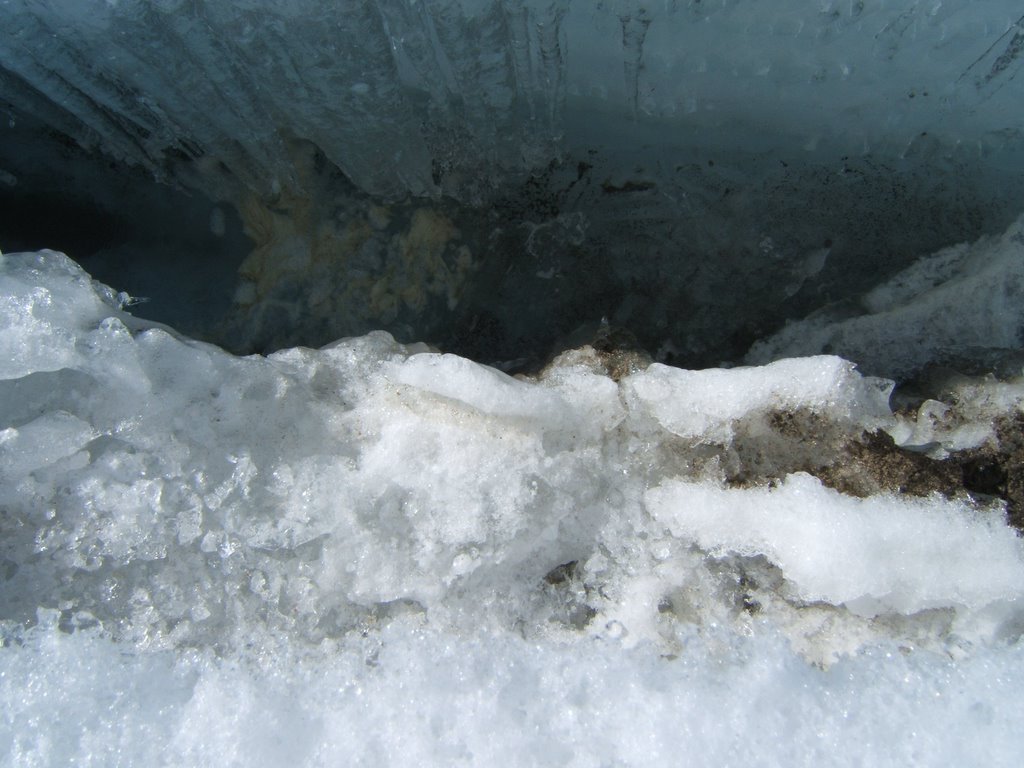
After Liz and I helped lift the met station down, we cramponed are way down the crusty glacier ice to the lower western most part of the Canada Glacier(pictured). The main supraglacial stream channel flows off the glacier just after this area. (The stream has cut into the glacier surface about 2 or 3 meters, which is much more deep than typical polar glacier supraglacial streams). In this deep channel we sampled with the clean suits on--- the site was particularly interesting because there was foam caught on some ice banking the fast-flowing stream--- it was definitely a sign of life- like the foam you see on the shores of many lakes in the hot summer. This microbial brew may be feeding on the metals in the water- at least that is my hypothesis.

Liz volunteered to be 'clean hands' and open the innermost bag of my triple bagged trace metal samples and take the sample. As 'dirty hands' I openned the outter two bags and wrote on the bottle label, without getting my hands anywhere near the sample bottle. Liz has sampled this stream before, dubbed the 'Hollywood Bowl' for its magical glamour. And it is tricky to stand with your crampon foot pushed up on the side of the channel wall to avoild stepping into the fast stream--- I would not be injured misstepping into the stream, however, I would make the stream dirty and not be able to sample. I am posting a picture of Liz taking the Boron and Lithium samples we take after the trace metals (it is ok that the mask is loose during these samples). We had a great time walking up the hummocks and through the internal cliffs of the Canada Glacier back to the met station (pictured below)- samples in tow.


Today is another beautiful day--- and we have an interesting visitor- Patrick Leahy, the Director of the US Geological Survey will be here at 9. I am going to get in the lab and filter my non-trace metal samples before he arrives- say hello and then head up the glacier with Heidi to sample some cryoconite holes that have melted into the surface of the glacier. This place inspires good science.

Thursday, January 12, 2006

Waterfalls

Most of the mass loss of glaciers in the polar desert is due to sublimation, not melt. The ice disappears immediately into the parched air. But, during the austral summer (now), with 24 hours of sunlight and near freezing temperatures, the sun heats up the debris on the glaciers--- in the same way that asphalt gets hotter than the neighboring sidewalk. During this season, there is melt. Much of the melt occurs along the margins of the glacier, where windblown soil collects, and where the sun has better access to the surface (the sun circles around the horizon, rather than rising and setting above our heads).

Yesterday, Liz Miller (from OSU) and I sampled along the margin of the Canada Glacier, where a huge waterfall gushed. This entailed wearing the white sampling suit and getting soaked from the spray. (Fortunately, polypro clothing is still warm when it is wet, and our camp was just a half hour from the sampling site). That was probably for the best, as it has been almost a week since my last shower.

Today, I head up with Hassan and Liz Bagshaw and Rae to readjust the upper met station on the Canada Glaicer and take more samples of water flowing on the glacier surface (supraglacial streams). We will wear the white outfits, to avoid putting any metal that we have on our bodies and clothes into the samples... it is amazing how much lead, copper, cadmium is in everyday packaging, lotions, and utensils. Cosmetics are the worst- fortunately, there is no need for makeup here--- with the exception of an occasional costume party. (Pictured below are organisms observed in a Canada Glacier supraglacial channel that may be utilizing metals as nutrients).--- The channel is approximately 1.5 meters deep and .3 meters wide.
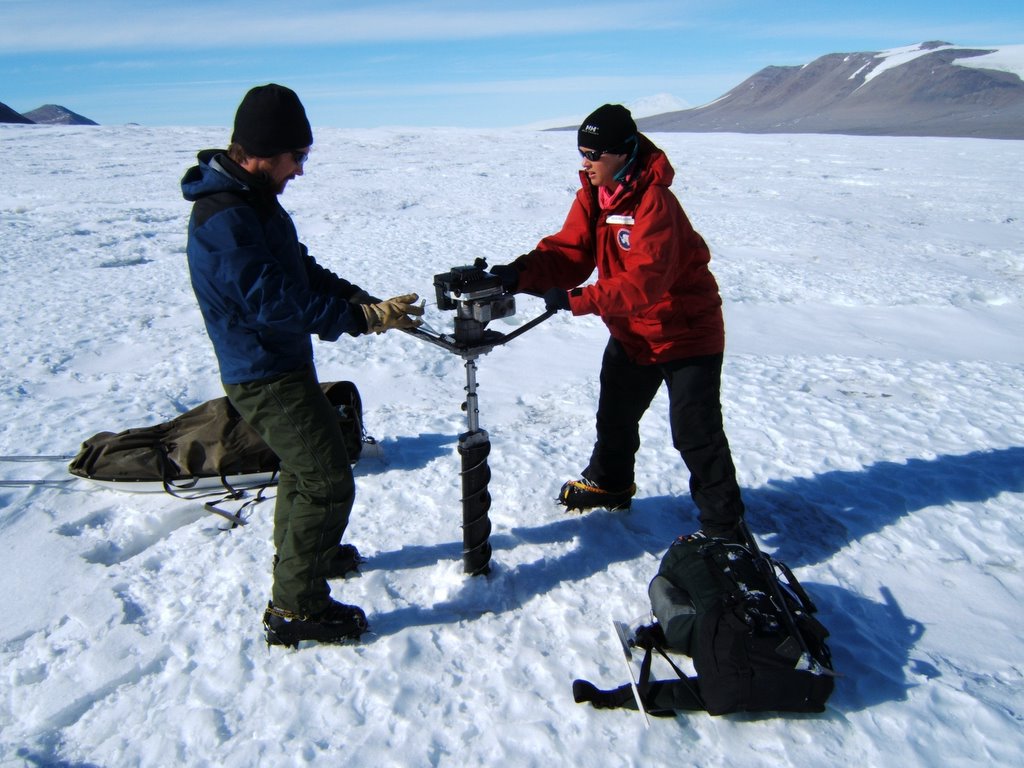
Liz will also be collecting samples for nutrients in the cryoconite holes (melt holes with ice lids- that trap dust and micro-organisms). She cuts them out with a Sipre ice corer--- that is revved up by pulling a cord much like a lawn mower--- and equally noisy. How did these organisms get on the glacier surface? Were they blown from the soil? Did they come from the seaspray of the Ross Sea? Did they migrate up the glacier? (Most likely they were blown from somewhere given their prevalence on dirtier glaciers at lower elevations.

Earlier, Liz chain-sawed a piece of the basal (glacier bottom) ice out to look for nutrients.... as scientist have already found evidence of primative organisms living at the basal interface between glacier and soil/rock. Often, these organisms freeze during the winter and come to life during any year that there is sufficient melt. They feed on the nutrients from the dissolved rocks. They are in every way extremophils. After today, Berry and I will sample the Canada Stream on the east side of the Canada Glacier--- this side has many algal matts, in contrast to the west side stream I have already sampled. I may be able to determine by sampling above and below the matts if trace metals are acting as nutrients (food) for the matts. We will also look at the waterfalls, I could use another shower.


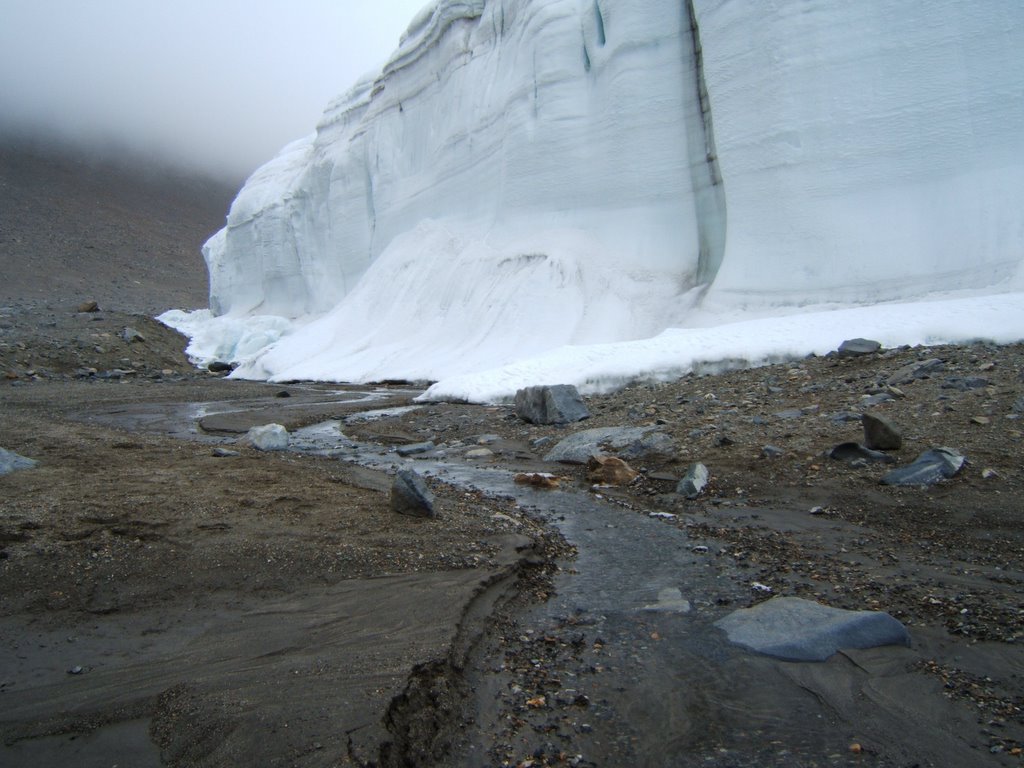
This year is far less wet than the extreme (10 to 20 year event) melt year of 2001-2002 when I did my Master's degree--- pictured above. During the 01-02 season the melt losses of the lakes over the last 2 decades were refilled with flooding glacier waters--- Lake Hoare pictured below had huge moats. (you can see camp in the far right)

Wednesday, January 11, 2006

Crossword Puzzles


Today Heidi will help me sample my final 8 samples from Andersen Creek (a few minutes from camp). Today I will also hike along and in front of the western face of Canada Glacier to collect sediment samples to be analyzed using XRF... I will compare trace metal concentrations in the airblown soils to what is seen in the glacier meltwater. I hadn't proposed this initially, but it is important- I will take an unknown out of the equation.

This morning was like many, brewing strong coffee, and sitting around with the camp attempting the Times Crossword puzzle. We each have our own specialty. Rae Spain the camp manager is perhaps the overall word guru. I thought I would post a picture of Rae and I in her honor. She is the heart of this camp.

Tuesday, January 10, 2006

Golf Bag Full of Snow

Yesterday, Cece, an expert mountaineer and I were dropped off at 10 am above the two icefalls of the Canada Glacier in the accumulation zone- (where snow is present, not bare ice). We landed in the white plains nestled between the Taylor Valley (camp) and Newall Glacier to the north. We started digging my 1 meter sampling snow pit, and immediately hit ice. Hard, resistant ice- possibly indicating refrozen melt--- I've seen these melt lenses in Alaska before, and they can usually be penetrated revealing a deeper snow layer. But after strenously chopping with ice axes for a half hour, frustrated I decided, it was a poor sampling site. Adjusting our plan, we radioed MacOps (logistical support) for permission to move our site north, uphill, to a better sampling location. With the ok,we roped up, put crampons on, and hauled the gear to a nearby site (pictured above)- I belayed Cece 50 feet ahead of me, and then followed her trail both of us probing for crevasses.
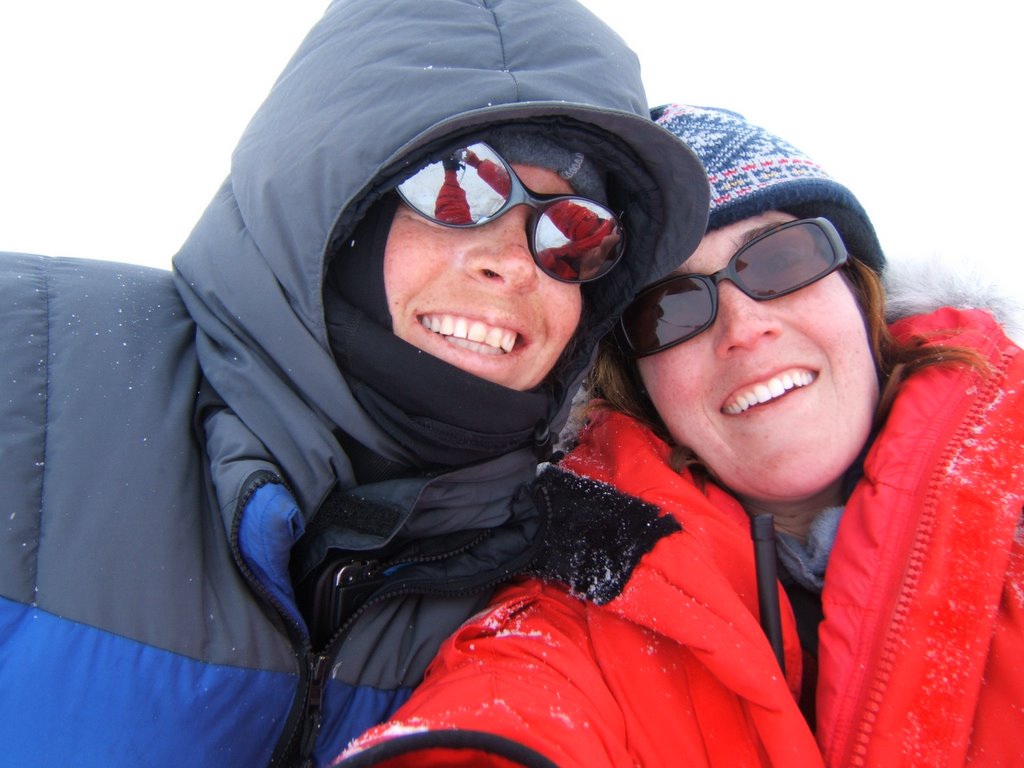
Before resuming digging, we spent time ensuring the new area- just a half a kilometer uphill was safe. Then we dug. After 20 cm we hit hard snow--- (dense glacier firn), We alternated between breaking this layer up with ice axes and shoveling out the pieces. By 1:30, after eating 3000 calories apiece and drinking water and a thermo of mocha we confirmed that the hard firn was acceptable to sample by relaying through Mac Ops to Berry Lyons (my advisor who had just arrived at Lake Hoare). We also extended our flyout time until 9 pm--- to insure enough sampling time. The clouds continued to migrate across the peaks, occasionally, socking us in--- (this happened intermittantly throughout the day- very unpredictableable). ---We had a survival bag and plenty of clothes and fuel and were prepared to set up camp if we had too. (I was happy to have the extra sampling time, even at with the prospect of spending the night on the accumulation zone). (I am smiling below after our samplings is complete-even with the weather not looking flyable).

Sampling went slowly (it took twice as long to sample the trace metal samples as it did at Mount Hood)- We finished the trace metal samples by 5 (including some mercury samples for Becki), took a quick refuel break, and continued to take Boron and Li samples (rare earth elements indicative of large-scale continental weathering), major ions (dissolved rocks) samples. We then took nutrient samples for Tree, a scientist and colleague of Berry and Anne's (OSU geology professor, Berry's wife) who may soon be the first person from Taiwan in Antarctica. We finished all sampling by 8. Packed up and consolidated our gear waiting for the helicopter (we were ready by 8:45- smiling happily at a job well-done).

Throughout the day the weather changed seemingly every half hour, with light snow during half of our sampling. Mentally we prepared to break open our survival bag and set up camp in this remote plain. However, by the time of our flight, the weather was calm although flat light- but you could easily make out all of the peaks surrounding us.

At 9, the helicopter attempted to land adjacent to us --- snow flew up engulfing it- and although it was very close, you could not see it. Eerily masked by the loose fresh snowfall. The whir of propellors and churn of snow the only evidence of its existence. The pilot attempted a few locations nearby, too no avail- we radioed the pilot we were fine to camp, but he had one last idea, to land above us on the mountain ridge between the Taylor Valley and Newall Glacier and there they could wait. So from 9pm until 12:30am (which looks like 10 in the morning in the austral summer) we hauled up the mountain. CiCi led, probing for crevasses, dragging the 60 lb survival bag with her climbing harness... I followed, pulling the 50 lb golf bag full of snow samples.

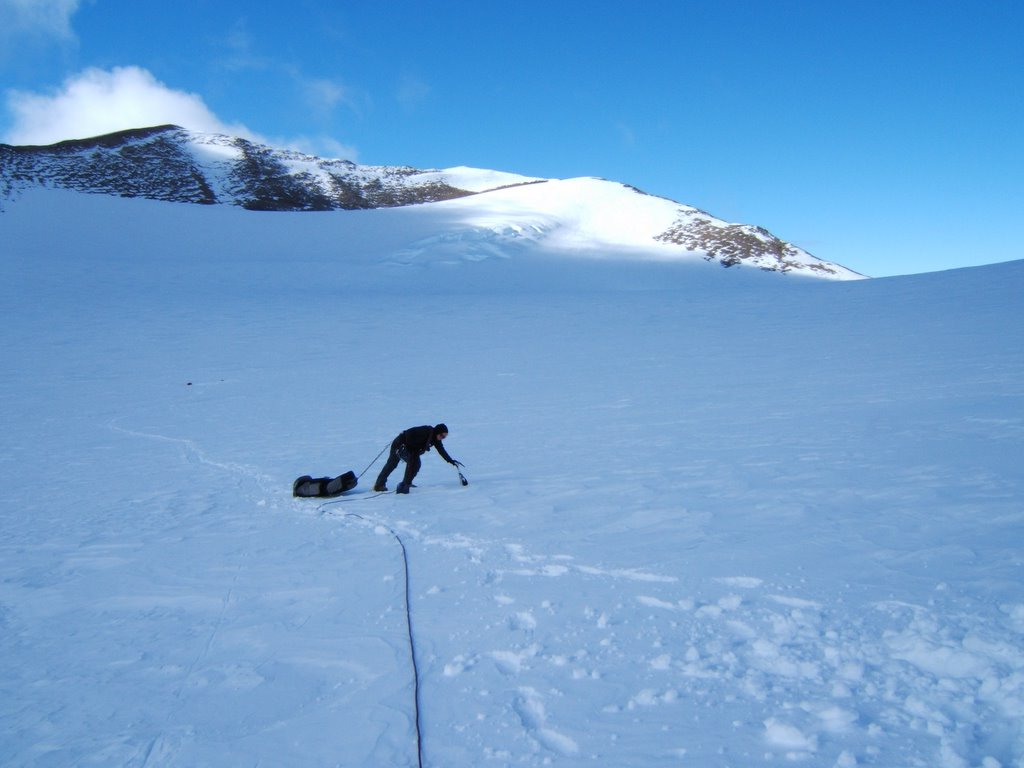
Together we carried over 220 lbs of equipment and samples up the mountain (pictured)--- alternating between knee deep snow and sheer, crampon-ready ice. We hauled our 'sleds' half-way up and then placed snow picks in the snow to anchor them while we climbed the steepest portion with only our packs-- the sleds pushed snow in front of them, creating additional weight for us so we decided that dropping our packs off and returning for them would be easiest.

We then dropped our packs off with the pilot and passengers, descending with our climbing gear to haul the packs. The pilot, co-pilot, and passengers waited patiently, taking pictures of the whole journey. We kept in good spirits throughout- laughing when taking rests in knee deep snow- that we were like Scott and Nansen (early Antarctic explorers)-- although, perhaps we were more like Nansen's sled dogs....but with the fear of crevasses occupying our minds.

The 4 men helped us haul the two bags up the final 200 feet with 2 climbing ropes- Before we boarded the helicopter, I looked beyond the Newall Glacier. The grey-white light magically illuminated dozens of distant glaciers and lakes. In this moment I was at peace. We were going home.

Landing at Lake Hoare at 1:30 am was amazing. It was great to see Berry- he had waited up, he is an advisor with a big heart, and to see Rae Spain- another round of hugs- I was adrenalized. She is the wonderful camp manager. We offloaded my gear, and said goodnight. I feasted on lamb, salad, potatoes, desert. When done, I saw banana on the counter and ate that too. Why not? I ate the equivalant of 3 days worth of food through this whole day doing much more physical activity than in a normal week). But it isn't easy to haul a golf bag full of snow.

Saturday, January 07, 2006

Your own two eyes

******UPDATE*****
1/24/06 ---"We are doing a terrible thing to this globe and a terrible thing to future generations of Americans", Senator John McCain said on CBS's "Face the Nation" last Sunday, in reply to host Bob Schiefer's request for his thoughts about global warming, returning from visiting Antarctica last month and the Arctic earlier in 2005.

"I'm confident, unfortunately, that climate change is real," added McCain. "It's taking place every day we don't do anything about it in implementing national policy to try to stop the emission of greenhouse gases, which are generated by human activity".

Previous Post:

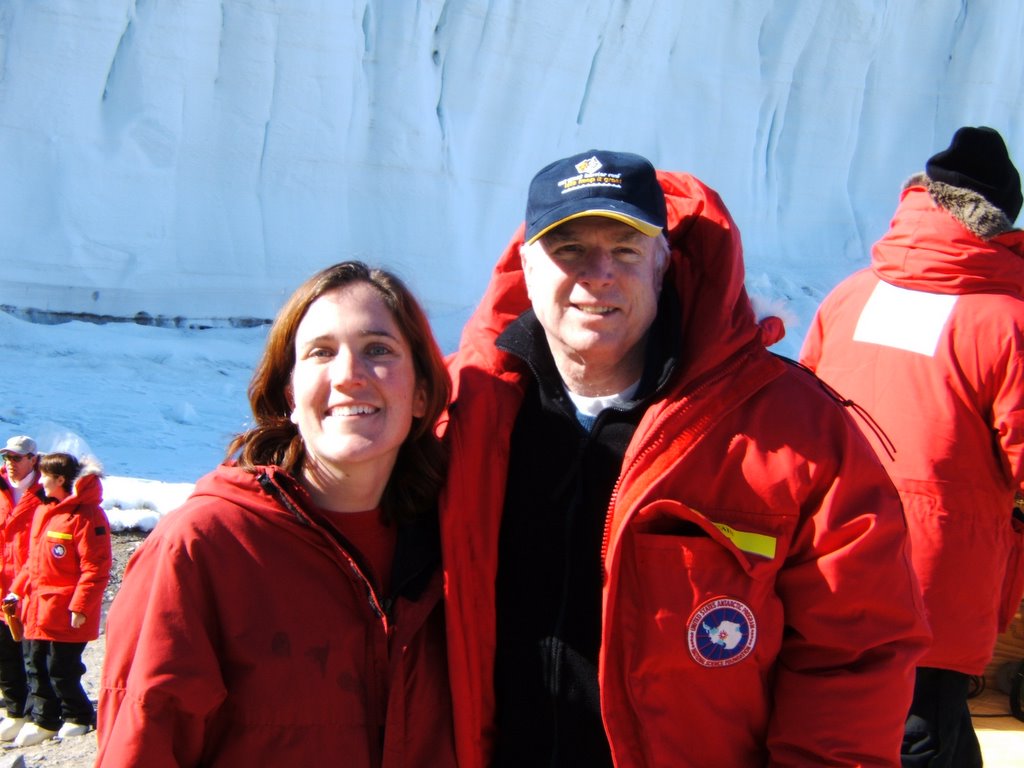
Today is Sunday, shower day at Lake Hoare, Antarctica. But today was no ordinary shower day. In addition to a bucket of water and a bar of soap- the sky rained Senators and Representatives today. 9 Representatives from the House Science Committee and Senators McCain, Sununu and Collins visited this remote camp in two one-hour shifts--- with most of the Representatives arriving around 10 in the morning, and the Senators arriving at 1 in the afternoon.

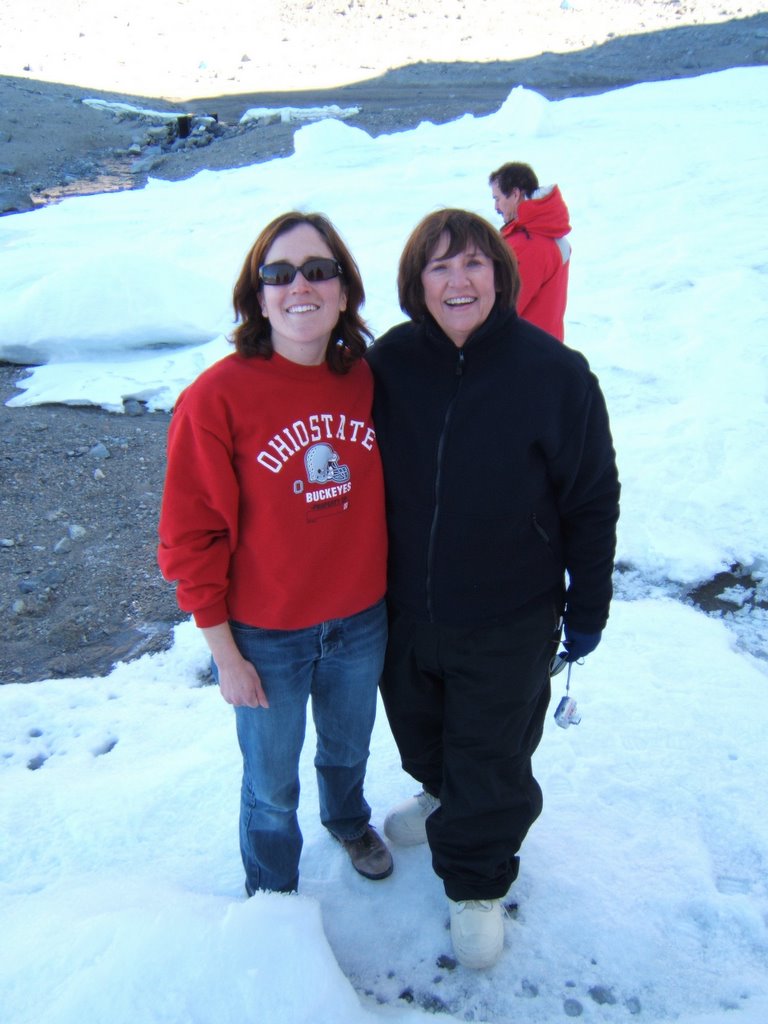
Rep. Darlene Hooley from Oregon took a picture of Hassan and I because of our Oregon connection--- there may be a small press blurb. (I am comparing the Canada Glacier with the Eliot Glacier on Mount Hood, Oregon). She was friendly and excited and all parties were interested in the workings of the camp, sleeping in tents, and the daily routine of sampling and conducting science in the Dry Valleys....) We took pictures of various Representatives posing against the bold backdrop of the Canada Glacier.

The most exciting part of the visit was definitely the second Helo visit carrying the Senators. When I shook Senator John McCain's hand I said "Thank you for speaking up about global warming-please continue to fight for legislation". Senator McCain said "Sununu, come over here, Sarah has something she'd like to talk to you about"- then he looked at me and said "Sununu needs some convincing" McCain's speeches in the Senate on climate change have included pictures of the receding ice in the Arctic and the pictures of glacier recession in Kilimanjaro (he became intrigued with this site as a boy)....he said he would not stop fighting and that Global Warming would be recognized and action would be taken, but he wasn't sure how much damage would be done. (Neither am I).

On his way out, I gave Senator McCain a postcard I had painted of the Canada Glacier, thanking him for his efforts- then he thanked me. As he and Sununu were standing outside, Sununu said something like---"the climate is one of those issues that is really hard to resolve, there is so much information." A few people from the camp mentioned that we are working to gather such information. I said "Five of the last 10 years are the warmest in historical record"- and McCain interjected "Go Sarah! Sununu all you need to understand global warming is your own two eyes."

Tomorrow its back to science, back to chipping out a piece of the influence of humans on climate, on ecosystems. We must take efforts to preserve our planet and understand the reprocussions of environmental policy.

White Ninjas

Today Hassan (from Portland), and Liz (from Bristol), and I completed several tasks. The first was updating two met stations, the second- collecting cryoconite hole (melt holes in the glacier that fill with sediment and are sealed with an ice lid), and the final was sampling trace metals in the supraglacial streams. This final task required Hassan and I to don the billowy (XXXL) white non-particulating suits, complete with head covering. The suits are huge in case it is very cold and you have to wear Big Red underneath. (Big red is the fond name for our huge Antarctic Parkas.) It was mild (1 C) and sunny, no wind and no big red, so we looked like white ninjas posed for attack in the fierce landscape of the glacier... it is fierce, there are steep cliffs in the ablation zone that host treacherous icy spears, and Mount Erebus looms forebodingly in the background.

I am hot (red-faced) and tired, and soon I will sleep with the billowing ninjas in my mind. There is an artistry to sampling, Hassan stood downwind so he did not blow any of his 'dust' into my bottles.... and it was a simple dance to keep out of each others way while maintaining the quality of the samples. It was a lot of hiking- we started up the glacier at 9 and I just finished filtering samples at 9--- after getting of the ice at 7. I am glad that I like long steep walks. Its worth the view and the science. These samples may illustrate the metals in this terrain, or may point to pollution from the Southern Hemisphere, the may be the food that the smallest of organisms thrive on... I can't wait to find out... but for now, I must sleep...

Wednesday, January 04, 2006

Resting Valley

The intense sun of yesterday has been replaced with a few stray snowflakes and a thick ceiling of clouds. There are three of us alone in camp. Me, Rae-the camp manager, and Heidi- the assistant camp manager. Stranded, no helicopters will buzz overhead dropping beakers (scientist) along the Taylor Valley. I feel remote. (Minus the email- and this feeling would be amplified). Rae made crepes more delicate than any restaurant for breakfast, and we had steamed milk with our coffee...a good way to spend a gray morning.
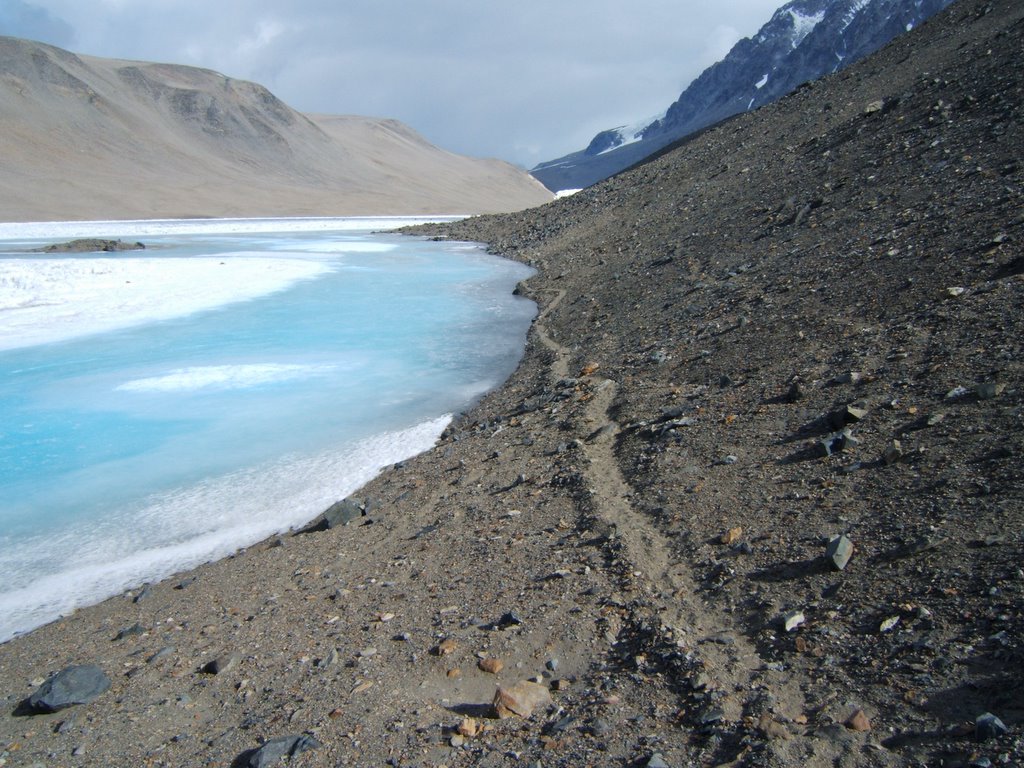
The assistant camp manager Heidi is helping me sample today. We are leaving camp every 2 hours for a total of 12 hours to sample Andersen Creek above the stream gauge (pictured below), this is just 20 feet from my tent and slightly more from the comfort of the main kitchen building. We all laugh every time the big white clean suits zip over our clothes... they are remniscent of the Stay-Puff marshmellow man from ghostbusters..
I would rather get samples today than wait. You can never count on the weather getting better in this place, although, I do have high hopes that tomorrow will be blisteringly sunny and the surface of Canada Glacier will begin to seep, meriting a climb around on the glacier, collecting its melt to determine if the pollution we produce in the industrialized world is contaminating its blood.

The sun expands the valley, stretching it far to the sea and into the iceshelf, on sunny days the valley is endless and the peaks of mountains unreachably high, bracketing our camp in their sturdiness. Protecting one side of rocks from racing winds, yet leaving other sides exposed, to whittle down into body forms, perhaps giving the rocks attitudes to walk themselves slowly out the valley over the course of millions of years. It is during these gray days that the rocks and people take their naps.

Tuesday, January 03, 2006

Descent into the Valley


Last night I stayed up late- for some bleary-eyed catching-up with Carolyn Dowling, I haven't seen her since she left Columbus a year and a half ago to teach at Arkansas State- and is looking at gas chemistry in the Dry Valley lakes. As the night progressed, the memories grew funnier ...Laughing, I went out from the dark of the coffeehouse into the bright light of the Antarctic summer and ran one last bag to the Science Cargo cage--- because I have been booted out of my dorm room at McMurdo while I stay at Lake Hoare.
Lake Hoare, beautiful breathe-taking Lake Hoare. The lake has developed an aquablue moat and is coated in feathery juts of ice. Next to the lake, I gasp at the site of the Canada Glacier's steep but rounded cliffs, they are sturdier than the mobile faces of temperate glaciers (pictured above). More familiar glaciers like those seen in Alaska, in Iceland, the Discovery Channel. The glaciers in the Taylor Valley are plump martian fingers resting on the skin of the valley floor. It really does look like skin from high in the helicopter, with permafrost cracking the ground along lines of freeze and thaw into patterned squares. The glaciers are slowly seeping water along their margins in shallow proglacial streams. (The surfaces of the glaciers are hummocked and rough from sediment and melt- pictured are Liz and Hassan on this surface).I took a brief nap after taking a 3 hour hike and woke up delighted to hear the sound of percolation. There will be water for me to sample. Will the fate of our pollution register in these extra-terrestrial melts? I cannot wait to find out!

Monday, January 02, 2006

The Spines of Antarctica

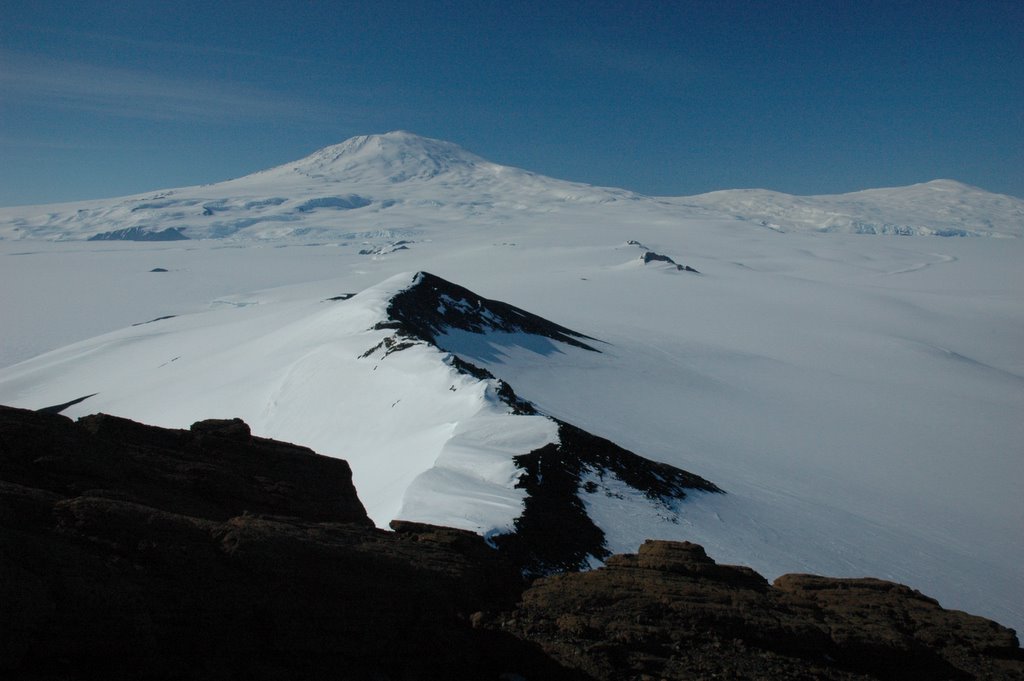
Pictured is the spine of Erebus... however, today I learned that buildings also have spines. Crary Lab- the Antarctic Science building- appears to be a long Jamesway in the style of a ranch house gone military. AKA brown, metal and no roof--- yet the building is no ranch--- it hosts many researchers from fisheries scientists, soil biologists and chemists- and the building stretches as deep as it is wide (but you cannot tell this from the front) The spine of Crary lab is gently sloping ramp that leads into the basement and down a steep hill on which the building rests. The basement is where the pumps aerate the fish tanks and strange experiments brew.

Chills ran up my spine today for the first time in this icy adventure. The temperature has dropped and winds are gusting up to 30 mph off the Ice Shelf. I have run back and forth between the helicoptor pad (HeloOps) equipment staging building and the lab and my dorm room myriad times today--- I have all of the DI water, filter towers, boots, and gear down at the Helopad now waiting for my flight out to the Dry Valleys tomorrow. (The Asgard Range- The Spine of the Taylor Valley pictured below)And good news, it looks like I will be digging my snowpit and sampling early in the season. I am more anxious to get the snow sampled than the streams as I won't need mountaineer support to sample the streams- and I don't want the mountaineers to be overwhelmed by the field requests of other scientists... so, Trevor- the hoss who taught my field safety refresher yesterday will be flying out to Lake Hoare (the field camp where I will be staying) on Friday for a glacier travel refresher and then he will stay in camp until Tuesday so we can catch a Helo up the Canada Glacier on Saturday or Monday to dig and sample my snowpit for trace metals. Then it is likely that my samples will make the boat out on the 16th--- the stream samples can be air mailed later...

The whipping wind is a great contrast to the warmer weather of the last few days...and to the very high temperatures kept in the science and dorm buildings. I cannot help but imagine how loud my tent would be rattling in this....oh, that Trey found me some earplugs!!! (Thanks:)

Saturday, December 31, 2005

A New Year


I could have been in Chicago, Columbus, Christchurch or Katmandhu. Welcoming the New Year is the same everywhere I have celebrated- a countdown some cheering a few hugs and smiles. And I did it in a dark mostly empty bar in McMurdo Antarctica with the sun baking down on us above. Happy New Year!!!

Kathy (from Byrd Polar) and Nik, Kathy's boyfriend, and I caught a bus to Scott Base--- hoping to bring in the New Year New Zealand style. The lights were a little to fast and the music a little too slow so we caught the big orange cogg-wheeled bus back to McMurdo Station the US base where we are living. (McMurdo is the biggest of the industrial villages in Antarctica--- stations are complete with fire houses and gym facilities in dreary anti-aesthetic browns and greens.

Nik committed the unspeakable crime of seeing penguins on our journey back to McMurdo. It turned out to be a fabrication--- or rather fabric trailmarkers teetering clumsily in the wind. The result was a few glares and some disappointed boos. The icebreaker has been churning up ice to make way for supplies to get in and it is very likely that penguins will materialize from this mire. We all want penguins. (I have posted a picture of one from Cape Royds in their honor--- )

Before the nights festivities, Liz, April (the undergrads from OSU) and I trekked up the Scott's Ridge above Robert Falcon Scott's primative hut from nearly 100 years ago, we peered into the Ross Sea from the highest vantage point, peeking into the Moat below the ridge (the sea ice begins to melt and will soon be largely gone by February) In this green expanse we strained to see penguins, but had to settle for the larger and angrier ice breaker.... this ice breaker is the only noise you can hear if you travel any distance from McMurdo. Its noise is only out-competed by black smoke blasting from its engine. On this walk, My feet acclimated to the scree (rock rubble) and by the time I am in the Dry Valleys, I will be ready for some hiking and sampling...These hikes around McMurdo are important, as I am likely to be working alongside people who have steady feet months ago arriving as early as October....

Today- Icestock and a Chili Cookoff mark the New Year- I have my snow school (field safety) refresher tomorrow and head for the field in a few days. In the meantime, I feel a bit anachronous listening to hippies bop on the stage in a land haunted by mighty explorers.

This is a harsh place.

Thursday, December 29, 2005

ChCh- So brief in New Zealand

The hardest part was saying goodbye to Trey his smile gently above the froth of his mocha. Then the plane, and more plane, and more plane- and more than 24 hours later I am in ChristChurch (at 10 am). After dropping my carry-on off at the Windsor Bed & Breakfast, I searched for Farmer's a department store to stock up on necessities (as all of my bags went to Australia for a spur of the moment side trip). Fortunately, my four hours of sleep on the plane was enough to complete this mission. Then back to the Airport and the Clothing Distribution Center (CDC) for my issues- I have every size of clothing from a small top to an extra large hat (& my big big head)

Then back to the Windsor for tea- a free offering at this B&B complete with wafers and charming knitting women. And I stumbled through the botanical garden, overwhelming my senses with bright talking flowers and smells that will be missed in the barren south.

I feel asleep by 6.

Fortunately, my bags arrived at the CDC at 6:30 (and I was the last person to have my things loaded on to the plane to McMurdo, Antarctica). It was quite a sight to see Trey's silver golf bag topping off the pile of our issues and luggage--- it looks like someone is going to play the coldest golf course ever... but in reality, my bottles (triple bagged and acid washed) are hanging out waiting for sampling.

We fly out at 10 (and I must head now to the airport for final instructions). It feels like the ice is near.

May the journey be short and save.