Tuesday, August 22, 2006

Ice Axes of Evil


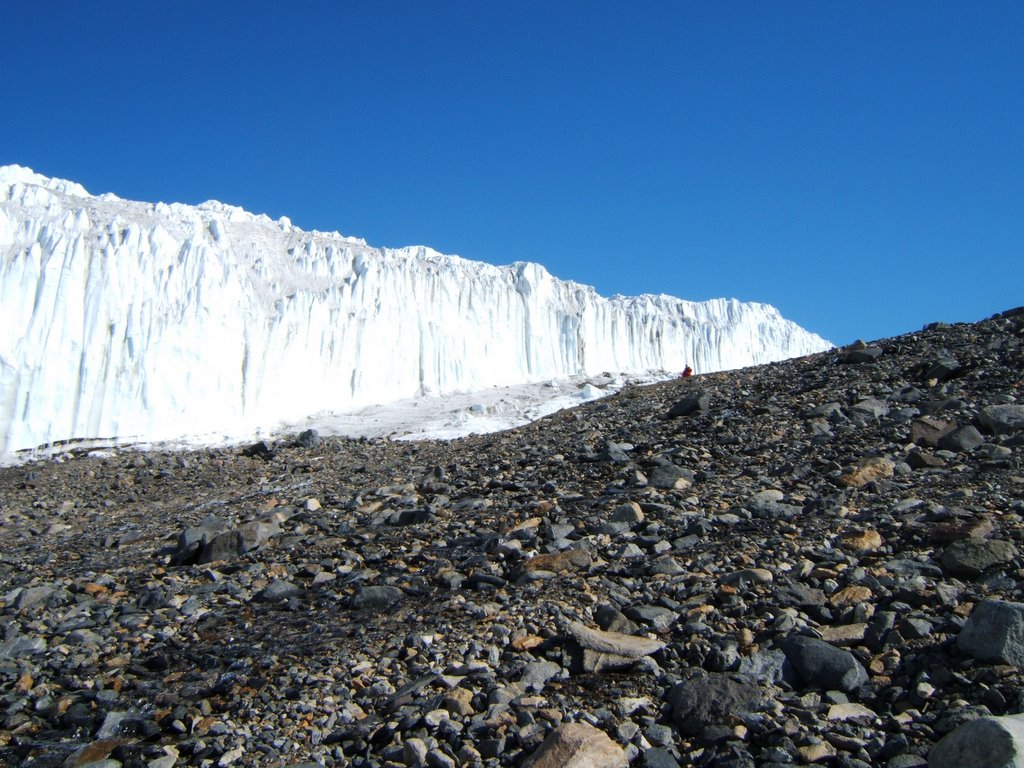
I am seventeen and blowing up a glacier. I love glaciers so much that I destroy them. Now, rather than blow them up, I get into my car driving in circles to push as much carbon into the atmosphere as I physically can. A mathmetician said to me, variance. There is just too much variance to know whether humans are responsible for the warming we are witnessing in our present environment. How about another math word- correlation. Carbon dioxide versus temperature change, 650,000 years and never have we had such high carbon dioxide as we do now- oh, and Greenland is melting fast...15 feet of sea level rise in my lifetime predicted

When checking luggage, especially mountaineering equipment, it is best not to refer to ones ice axes of evil. To avoid intense scrutiny, I've named them silly picks. My new glistening ice ax much lighter than its lumbering 10 year older counterpart. Still neither are exactly soft looking. (A contrast to the serenity of the ptarmigans gaurding our camp.)

The first email in my in box upon returning to civilization was from my first female field science mentor- Sally McGill. She is kind enough to add my name to a publication on the Garlock fault including a map we worked on together in the summer of 1996 when I was 18. Sally inspires me in so many ways...

Also, upon returning home, Trey handed me a few rebuttles to a Dispatch editoria I wrote on the misinformation k-12 students are taught global warming and evolution. Most responded that global warming is a farce. Every temperate glacier I have ever stood on is retreating... fast. Berry left a note on my desk to a new Geophysical Research Letters publication by a Swiss crew noting the global disappearance of temperate glaciers approaching...''this will make you cry''. How true. I get my information and professors researching climate change- not popular press.

A question for the girls in the tents--- where are we heading? What is our responsibility as citizen scientists?

Thursday, August 17, 2006

When does dinner begin?


It is 6 pm and I am still on Girls on Ice time... what does that mean?

Answer this: When does dinner begin?

The answer when hiking over around and underneath the Easton Glacier with a team of fabulous, talented girls is: when lunch ends... (a good food mantra from mountain veterans Erin and CeCe)

Now that I am warm and near a computer perhaps I don't need that third dinner... but, then again, I'm still in Washington and the Easton Glacier is just a few hours away...

Tuesday, August 15, 2006

Girls on Ice


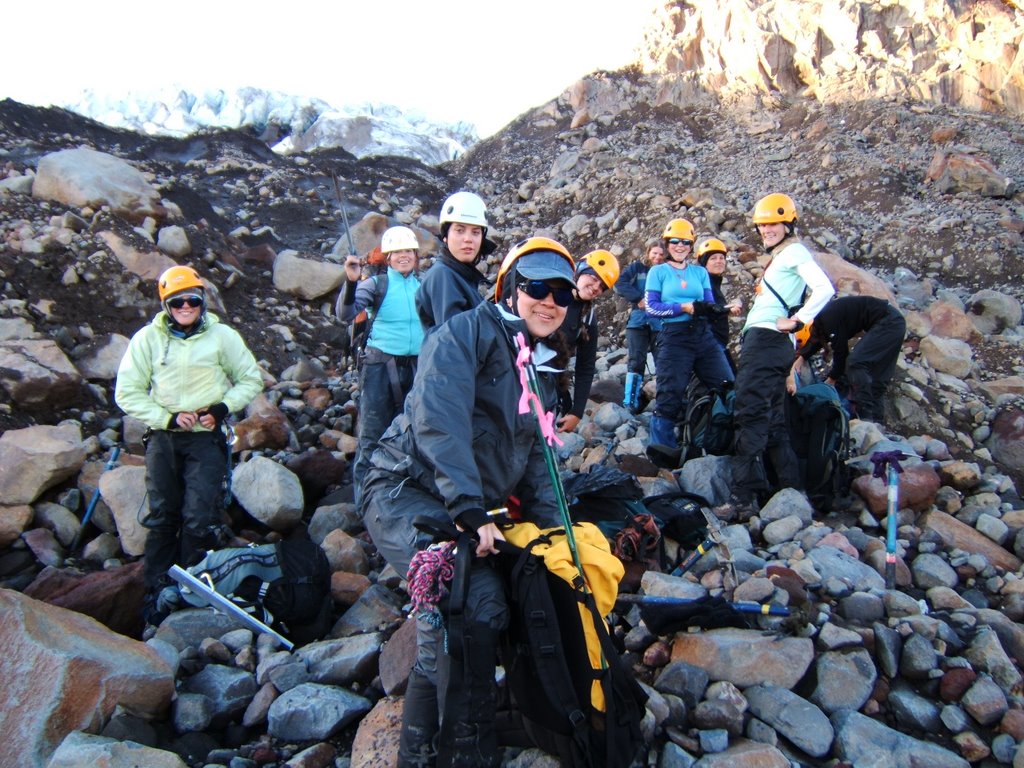
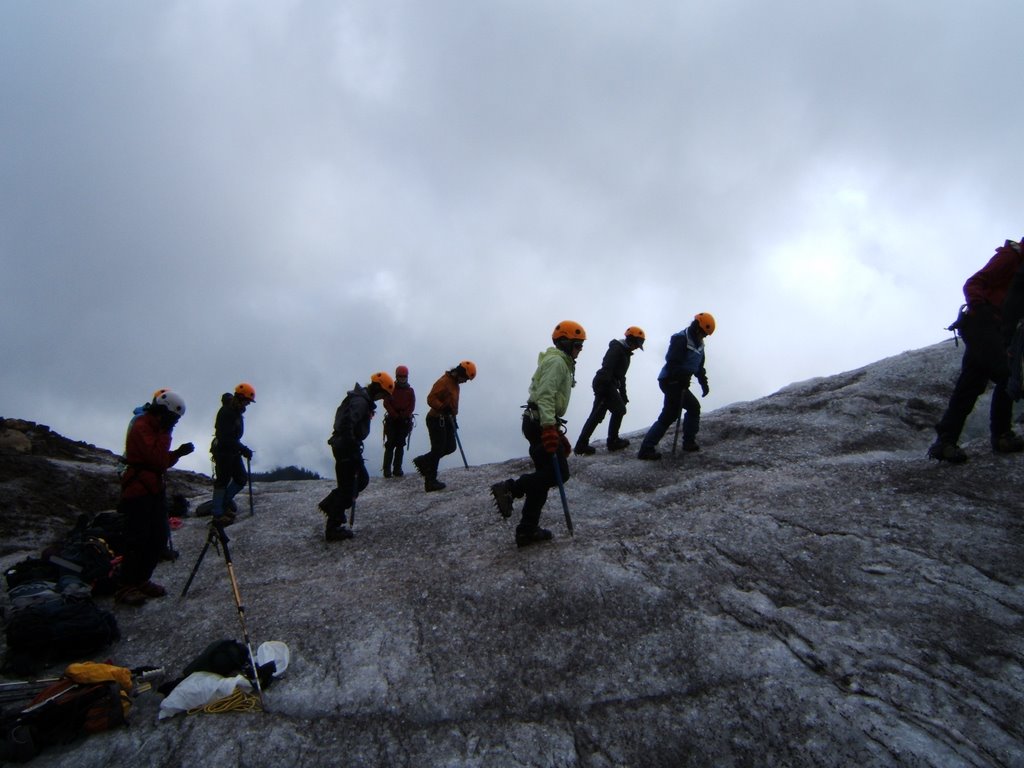
Thanks to all the girls and women in Girls on Ice. Here are some of the photo highlights... text will be added soon. To the girls--your travels be they intellectual, physical, or artistic have only just begun- your futures are so bright they inspired me, Erin, and CeCe to keep our eyes wide in wonder as we explore.

Friday, August 04, 2006

The beautiful and shrinking North Klawatti Glacier-


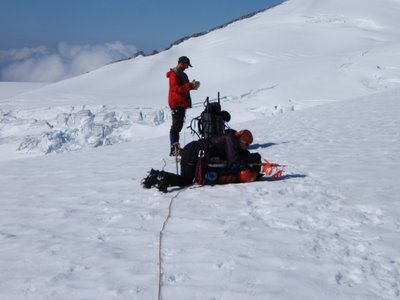
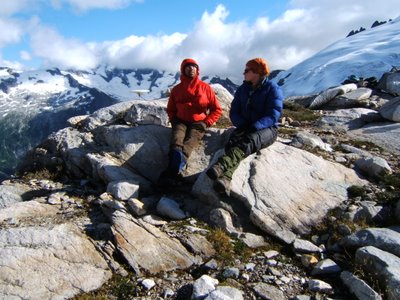
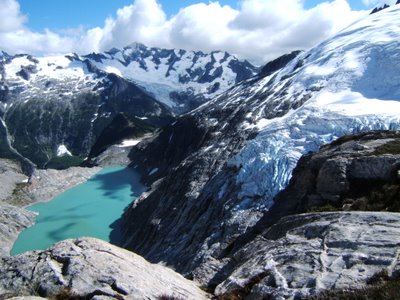
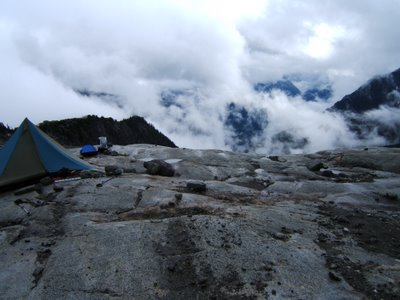
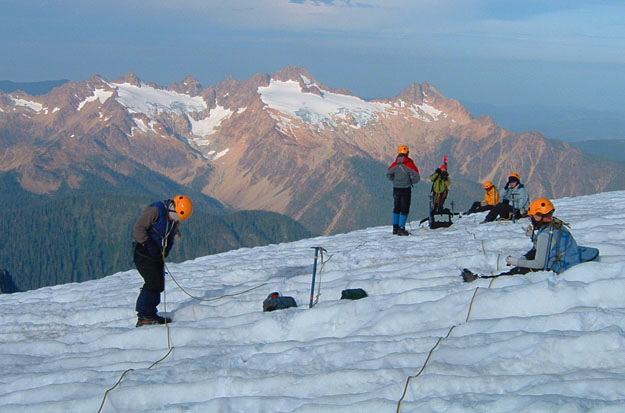
Here are some pics (not in order yet---) from Erin Pettit and crew's (Rob, Seth, Matt and me) survey of N. Klawatti Glacier in the N Cascades--- we gained over a mile in elevation (going down and scrambling was the hardest for my Ohio legs--- The views were stunning and Erin's work will likely further illustrate the extent of glacier retreat in this region.It started me how little snow there was in the accumulation zone of the N. Klawatti considering the heavy sn0wfall this winter. It was on average just a few meters deep... except in one depth probe, I found the snow to be 5, 6, no infinite meters... oh, wait that was a crevasse...
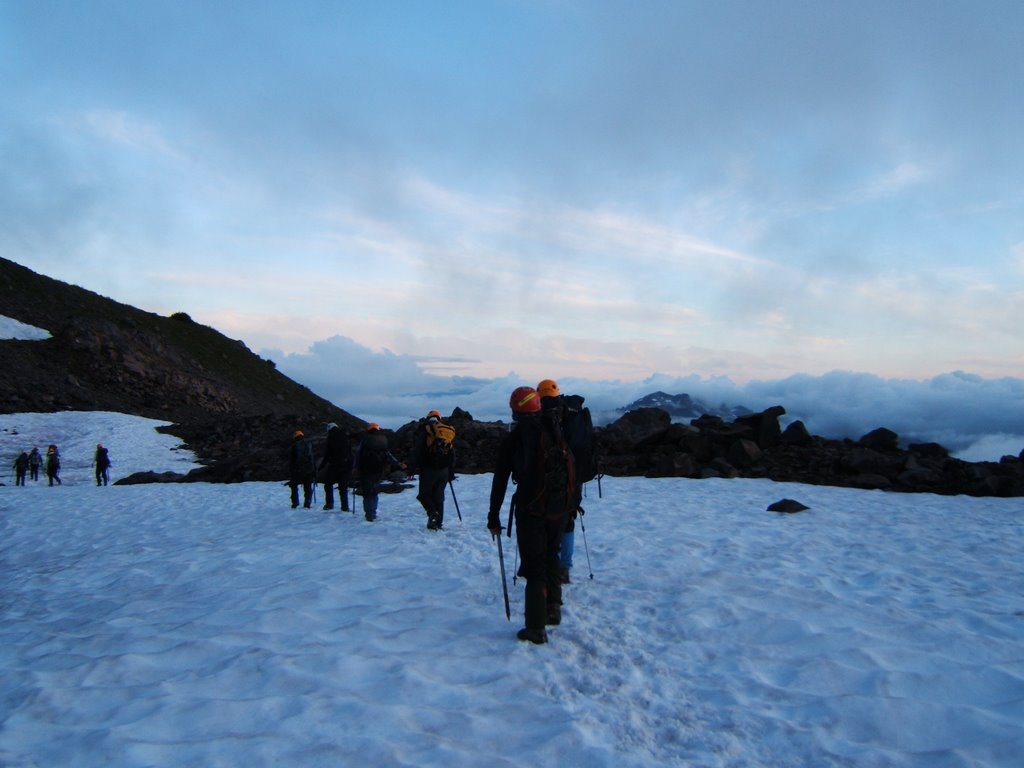
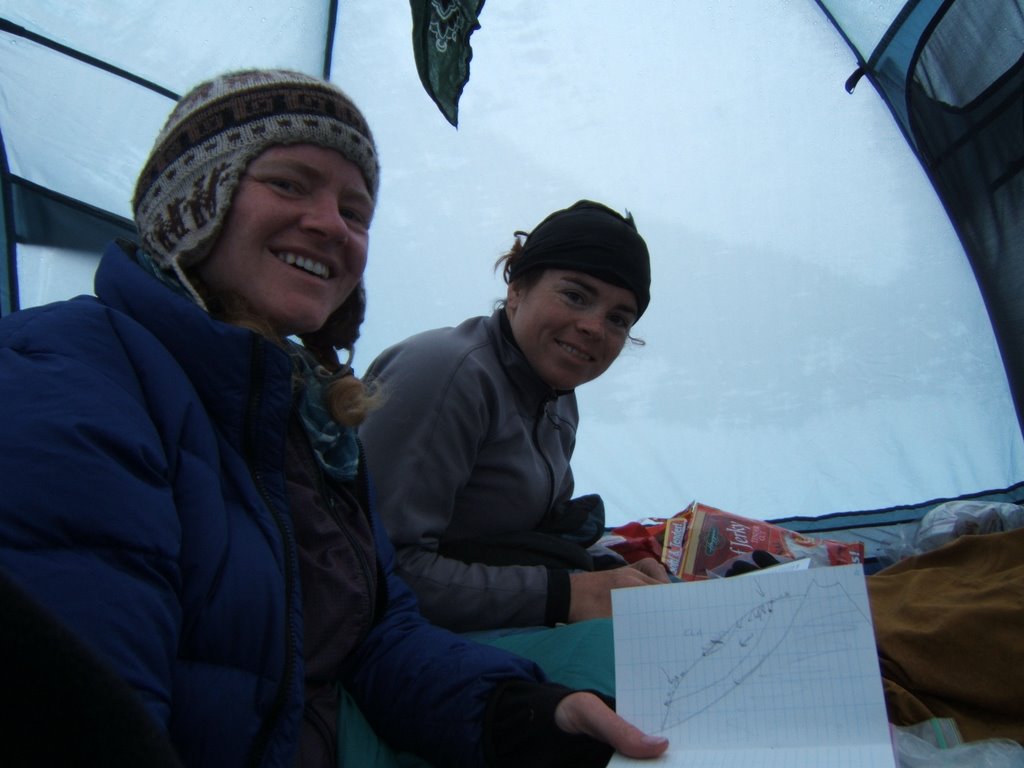
Glaciers are beautiful ---their treachery augments their allure.... After a long first day of hiking up, we spent the next day confined to our tents as sleet, snow and rain socked us in (a whiteout hovered above us blending glacier snow and ice with sky in one continous plane) --- on the third day navigated four glaciers, including lowering our packs over an arete and belaying ourselves from rock to ice. (One glacier was aptly named Inspiration, likely from the size of its gaping crevasses that inspired us to focus on steady footing). The fourth day we surveyed full force- two heading down to the N Klawatti ablation zone (where the glacier ice is exposed and the snow has melted) and me, Erin and Seth heading up into the accumulation zone. We completed around 10 total transects across the glacier.
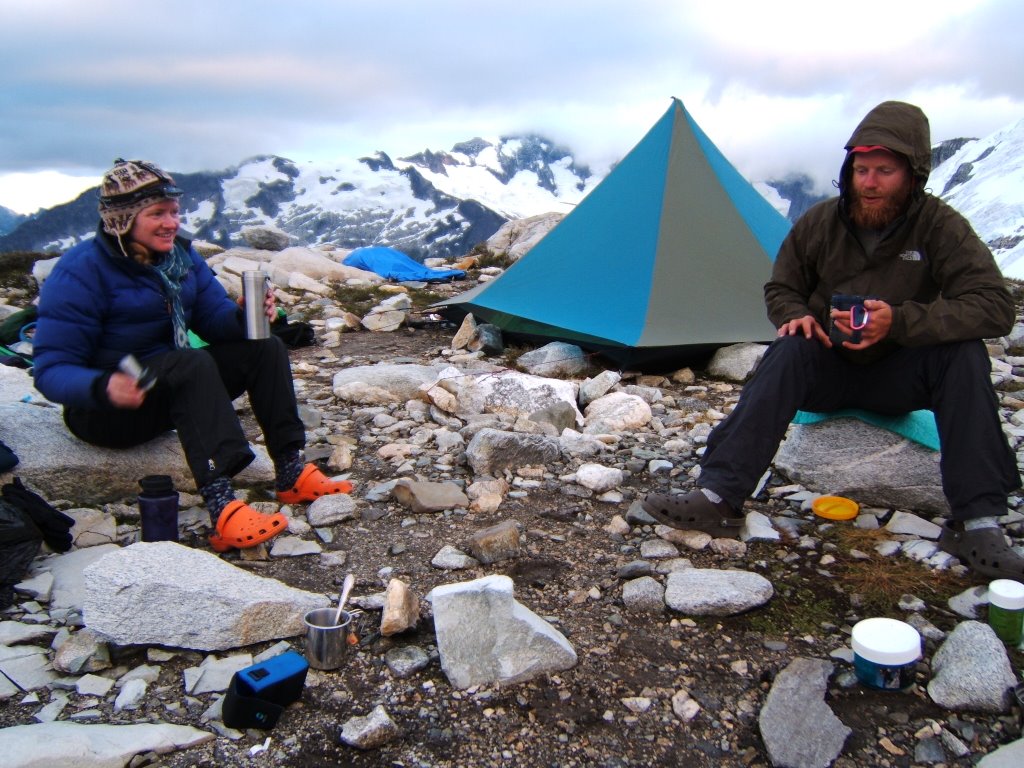
On the final day we hiked 13 hours out (I was slow going out on the final descent, practicing on the bike path isn't quite the same...) I learned some new advice including trying to land gingerly on my feet rather than plodding on the descent... much like the rest step helps with going uphill this saves the knees on the descents. Also, I'm heading out to get some Crocs before Girls on Ice... lightweight plastic clogs with air holes that leave heals free to dry out after a long hike... these clogs weigh about the same as a pair of flip flops...

Can't wait to help Erin and CeCe teach the girls about glaciers!!! One more tidbit---on the way down the trail we ran into a crew of Texan tourists who were very interested in global warming. The retreat of the glaciers in the N Cascades has accelerated in recent decades. 10 meters on average per year... (of terminus retreat)... that is over 30 feet.
We recommended seeing Al Gore's movie An Inconvenient Truth (or the book for that matter). Our actions on this planet have consequences- the fuels we burn, the land we till, the fertilizer we use.

Wednesday, July 26, 2006

Cascading Glaciers

Tomorow I leave Columbus for Seattle- and its off to the ice! Erin Pettit a glaciologist from University of Washington Seattle has been busy with field GPS surveys all summer. On Saturday, Erin, me and a few others will head up the North Klawatti Glacier in Marblemount, Washington to help Erin complete her surveys. We may summit El Dorado peak before we return on Tuesday.

Next on the list is Girls on Ice, the program Erin has run out of the North Cascades Institute (picture below from Megan McGintey http://www.ncascades.org/programs/youth/girls_on_ice/)

This ten day field glaciology program will be exciting!!! The girls attending this season sound excellent, representing top notch 15-19 year olds from around the world. I will update with pictures from both trips as soon as possible. Leading Girls on Ice is Erin (she's a physics- based glaciologist whose research includes studying cliff face dynamics in the McMurdo Dry Valleys) and I will assist Erin and teach the girls field glaciochemistry. My advisor, Berry Lyons, loaned some test kits that we can use to perform simple analyses on glacial streams. The principal mountaineer will be none other than Cecelia Mortenson! It is a small world indeed to see CeCe after our adventures hauling a golf bag up the Asgard Range, Antarctica. This time, I shall have ample candy bars - ready for the unexpected- when granola bars just doesn't cut it.

Sunday, July 09, 2006

Design Intelligent Science Standards

Headlining the Columbus Dispatch Metro Section (7/9/06):

Revisiting intelligent design

--- The synapsis- Several Ohio education board members suggest that science standards on topics such as evolution, global warming, stem-cell research, and cloning need to provide a template "so schools would be comfortable discussing controversial issues."

Controversial issues. Not to scientists... why are non-scientists allowed to look at science without recognition of the long, hard, years and years of research that went into developing these theories?

Are these issues controversial because people aren't educated in the true nature of what is a scientific theory? A theory is not just a speculation... a theory is something that can be proven again and again and again.... new fossil finds support evolution...new climate records examined continue to show that fossil fuel burning is leading to overall global warming... My 'theory' that is going to rain tomorrow is not a theory.... but a guess...a hypothesis.... a belief... (nothing against beliefs...I have them too, but as a scientist, I try to not intermix my personal beliefs in scientific discussions-- keeping the science science)Let's teach students they can still have their guesses and beliefs... but scientific theories hold as long as they withstand future testing.

Is it any wonder that Ohio State education standards are trailing behind reading and math, when one of the proposed questions on state science exams is: "Describe that scientists may disagree about explanations of phenomena, about interpretations of data or about the value of rival theories, but they do agree that questioning response to critism an open communications are integral to the process of science...Discuss and be able to apply this in the following areas: global warming; evolution theory; emerging technologies and how they may impact society, e.g cloning or stem-cell research"

This question has no place in a state science exam....

This is philosophical... this is belief. Keep this discussion outside of science classrooms.

Thursday, June 29, 2006

Looking for cold life

Life in Ice
The hot churning earth, volatile gases, fiery sparks, meteorites, primordial water... or something much, much colder. In 2002, Dr. John Priscu from Montana State University spoke briefly at Byrd Polar Research Center (OSU) on the strange organisms inhibiting the lakes at the base of polar mountain glaciers in the McMurdo Dry Valleys (MCM). In his conclusions, Dr. Priscu suggested that life was more enduring in the cold and more preserved. Genetic material and whole organisms have been preserved and even revived after thousands of years trapped in ice (Christner et al., 2001). At the conclusion of his talk, Dr. Priscu asked, “Are icy conditions ideal for the beginnings of life, on earth or other planets?”

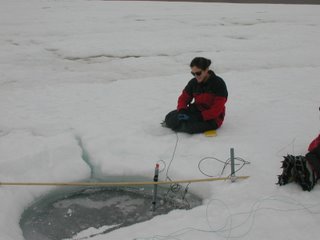
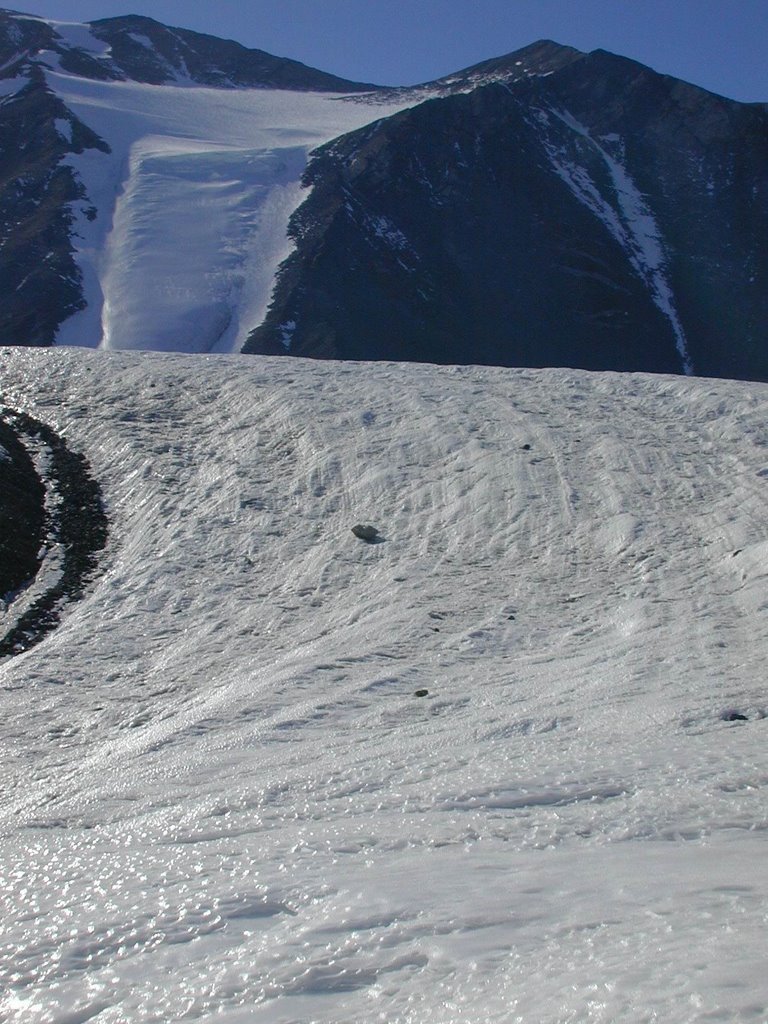
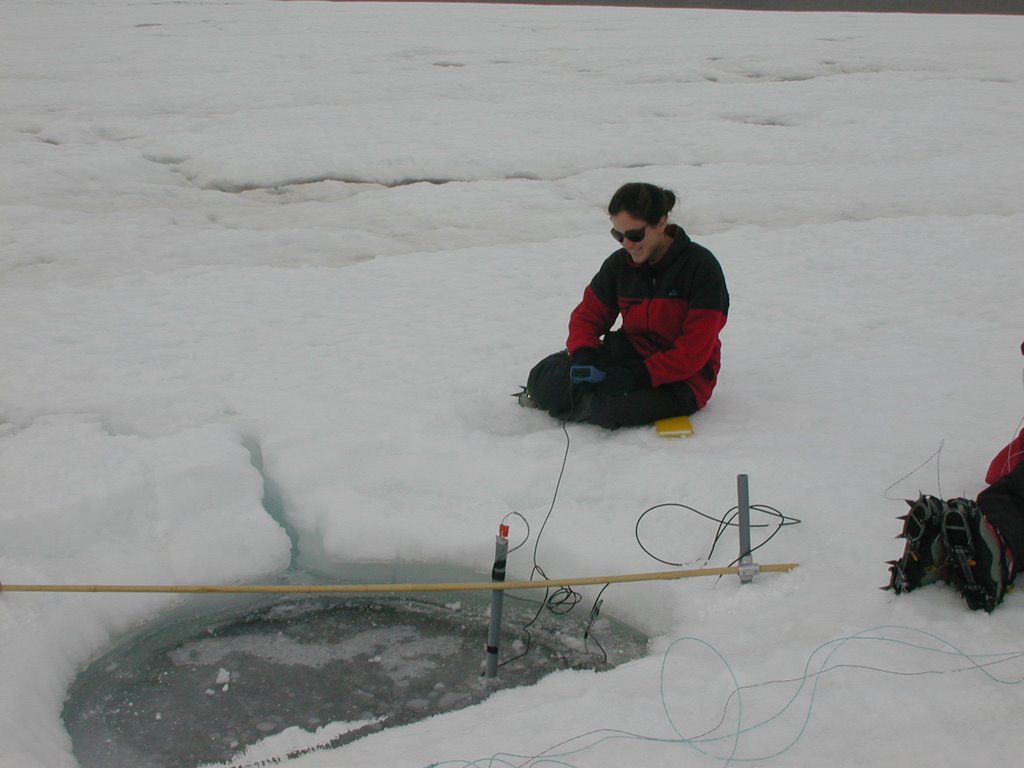
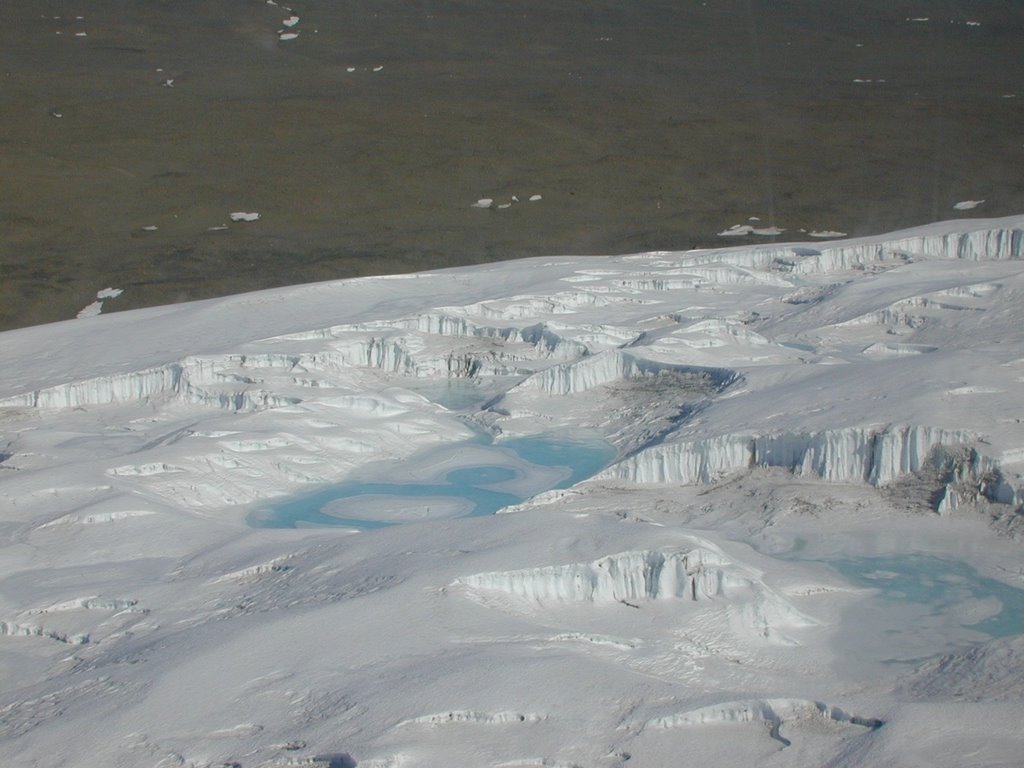
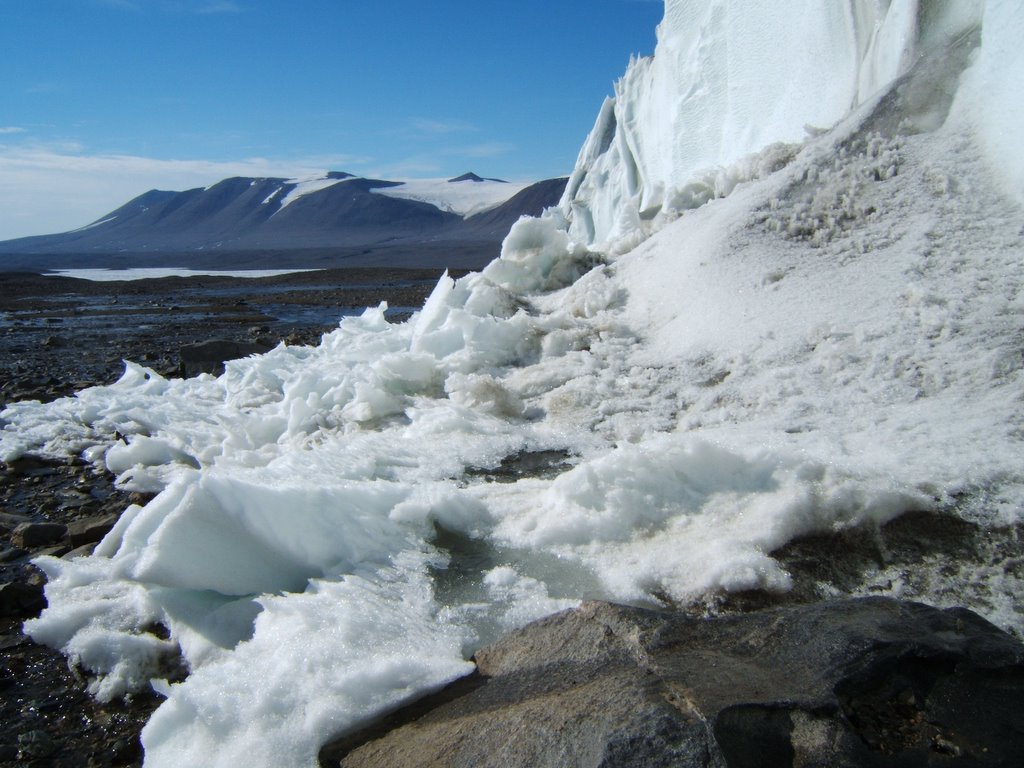
Are polar mountain glaciers are the most accessible places to investigate this question? On mountain glaciers at all latitudes micro and macro-organisms have made homes in small, enclosed melt pocks on the glacier surface, better known as cryoconite holes. Cryoconite holes form as dark sediment blown or falling on the glacier surface is heated by the sun, melting into the glacier surface. In temperate glaciers... warmer temperatures and longer melt seasons often cause these holes to have a rapid lifespan, forming and then flushing from the glacier--- connecting in a network of supraglacial streams (streams flowing on the glacier surface) and or exiting through fractures inside the glacier. Polar glaciers are unique, the Arctic and Antarctic host cryoconite holes thatare isolated for as many as 10 years (maybe much more); sealed from atmospheric exposure by ice lids that are several centimeters thick. When these flush (pictured), the organisms entombed may end up back in proglacial lakes. Their unique chemistries may provide some hints on the type of life we might expect to find in icy planets...

Dusty glaciers

Dustand water are the two criteria found in most hot and cold origins of life scenarios (Here and on other planets). Yet, cold temperatures best preserve genetic material including RNA and DNA, which are destroyed at temperatures above 100ºC (Rothschild and Mancinelli, 2001). There is no genetic evidence that the first organisms preferred hot conditions as many original early life hypotheses proposed (Galtier et al., 1999). Cold-water brines contain much more HCN (hydrogen, carbon, nitrogen--- aka the building blocks of life) and preserve seven times more life essential amino acids than their warm water counterparts (Rothschild and Mancinelli, 2001). Organisms have been revived after freezing to temperatures of –196ºC (Rothschild and Mancinelli, 2001).
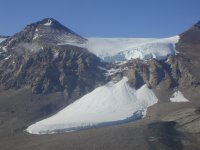
Glacier ice on earth, especially polar glacier ice with higher stratospheric deposition, contains high concentrations of inorganic nitrogen (Hodson et al., 2005). Temperate and poly-thermal glaciers elute (or leach out) soluble ions including nitrate during the early part of the melt season.
Micro-elution of glacier salt occurs within the ice lattice itself. In 1981 Maccagnan suggested that acids occupied liquid sheets along ice crystal grain boundaries. Acids commonly found in glacier ice, including nitric, have much lower freezing temperatures than water perhaps aiding their migration (Fukazawa et al., 1998; Maccagnan, 1981; Price 2000). Laboratory Scanning Electron Microscope (SEM) studies on glacier ice reveal soluble salts are located along some grain boundaries. Soluble salt fluctuations in the Greenland (GRIP) ice core showed percolation during the Eemian warm period (125,000-115,000) (Rempel et al., 2001).

Bacteria revitalized from ice cores at all latitudes have likely endured repeat cycles of melt and refreeze along with extreme UV exposure and variation (Christner et al., 2000). Isolates revived from glacial ice are from spore groups with high tolerance to environmental change (Christner et al., 2000). The greatest bacterial diversity appeared in tropical ice cores, closer to plant-rich ecosystems excepting the dusty Taylor Dome ice core (Christner et al., 2000). The importance of dust may be critical to identifying the most viable extraterrestrial glacier ecosystems. Dust is likely to be dissolving in glacier melt trapped in cryoconite holes and intergranular ice boundaries (Fukazawa et al., 1998; Tranter et al., 2004). Life is most observed on glaciers in association with high rock:water ratios.

Cold Life on Earth

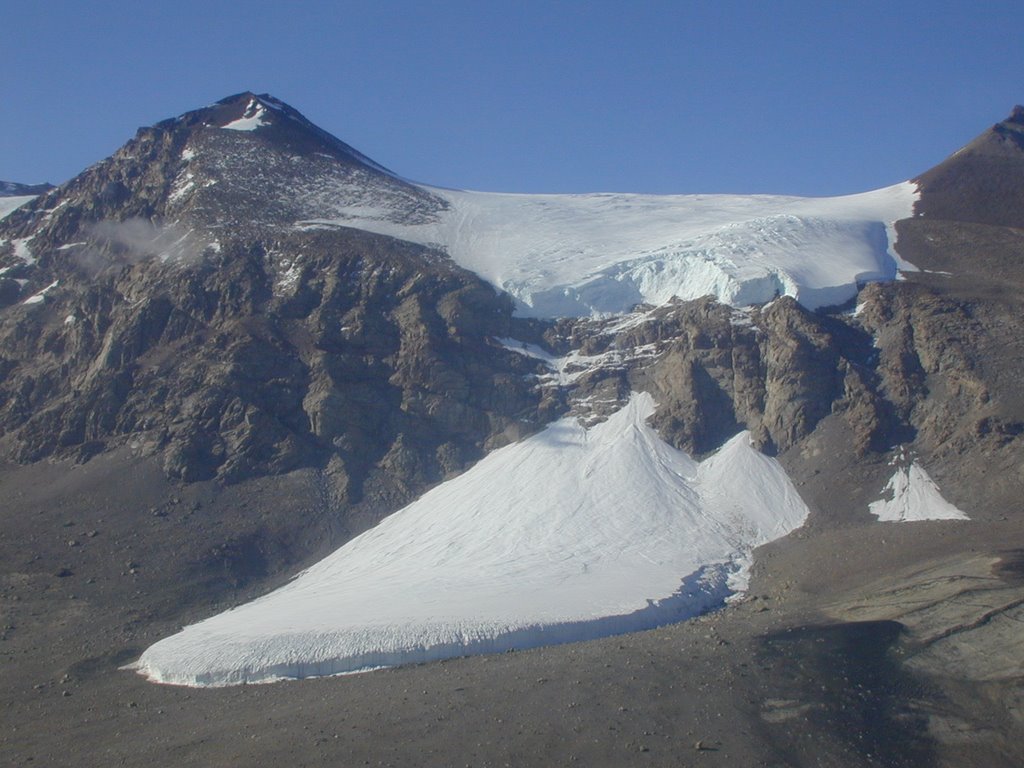
The McMurdo Dry Valleys (MCM) at 76º30’ to 78º30’ S, 160º to 164 E host the most extreme polar glacier mountain environments on the planet. The MCM is a polar desert, representing the largest ice-free region in Antarctica (Drewry et al.,1982). Annual temperatures average –20 ºC as measured by valley floor meteorological stations (Fountain et al., 1998). Glaciers are the primary source of water to the ice-covered lakes. During the austral summer, proglacial streams flow for four to fourteen weeks a year. Yet, sublimation (evaporation), not melt, is the primary source of ablation to MCM glaciers (Fountain et al., 1998). Energetically, sublimation requires almost 8 times more energy than melt, therefore, MCM glacier ablation rates are much lower than temperate glaciers of similar sizes (Fountain et al., 1998). Taylor Valley, one of three MCM valleys, runs W to E from the Taylor Glacier, an outlet of the East Antarctic Ice Sheet, to the Ross Sea, and is bounded on its north by the Asgard Range and on its south by the Kukri Hills. Strong katabatic winds flow down the East Antarctic Ice Sheet into Taylor Valley carrying valley floors sediment east onto the lakes and glacier surfaces. Lesser winds also transport dust west from the Ross Sea as indicated by the unique glacier chemistries and grain-size distribution on the west and east side of glaciers (Fortner et al., 2005; Lyons et al., 2003).
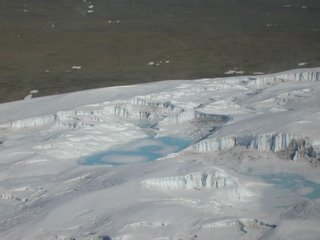
Melt and sublimation features including internal cliffs, ponds, channels and cryoconite holes exist on many of the MCM glaciers, most developed at dusty and low elevation sites (observation). Dusts (salts) from the valley floor, melt into the glacier surface forming cryoconite holes, or ice-lid covered melt pools, ranging from 5 cm to 145 cm in diameter (Tranter et al., 2004; Fountain et al., 2005) .

Cryoconite holes are the most easily identified habitats existing on MCM glaciers (Tranter et al., 2004; Wharton et al., 1981). Biotic colonies are well-documented within MCM mountain glacier cryoconite holes including cyanobacteria, rotifers, tardigrades and ciliates (Porazinska et al., 2004; Tranter et al., 2004). In cryoconite holes nitrogen is fixed from ice by photoautotrophs, or inorganic nutrient fixers whose primary energy is from the sun (Tranter et al., 2004). Nitrification by microbes is likely to occur in oxic cryoconite holes, whereas other microbes in the suboxic glacier bed exist via denitrification and sulfate reduction (Hodson et al., 2005; Tranter et al., 2004). Anoxic conditions may even be met significant basal organic matter promoting methanogenesis and thus varying sub-oxic- anoxic communities along the glacial bed (Skidmore et al., 2000; Tranter et al., 2005). Non-basal ice also contained microbial life, significantly less abundant than dirty basal ice (Skidmore et al., 2000).

Cryoconite holes in the MCM contain significant dust and host much more observable life than supraglacial streams (Tranter et al., 2004). Snow cover buffers Antarctic soil organisms from harmful UV (Cockell and Cordoba-Jabonero, 2004). However, ice lids and dust may be buffering cryoconite hole organisms from UV exposure and premature death. Glacier snow and dust may offer organisms shielding on other higher UV planets. At all Eh conditions, high concentrations of soluble acids (from atmospheric and weathering inputs) are microbial food (Hodson et al., 2005; Tranter et al., 2005). Therefore, atmospheric redox conditions on Mars and other planets may be of less importance to life than the presence of dust and water.

Biotic compositions in MCM cryoconite holes are not representative of the communities existing in the immediately neighboring soil, but may have complex mixing patterns related to larger-scale wind patterns (Poranzinka et al., 2004). Phylogenetic analyses of cryoconite hole species reveal similarities between lake and streams, indicating that through wind transport of biology containing soil aggregates material is transported between the valley floor and glacier (Christner et al., 2003). Cryconite holes development is attributed largely to solar melting, the holes higher on MCM glacier were of similar diameters to lower cryoconite holes and all holes contained similar amounts of sediment (Porizanska et al., 2004). This is contrary to expectations with lower wind-blown sedimentation observed at higher glacier elevations (Lyons et al., 2003). Similarly, cryoconite holes on the western sides of glaciers were of the same size as those on the eastern sides (Poranzinka et al., 2004). Therefore, the size of holes may have some relation to the amount of heat generated by organisms, and thus the length of time these organisms are seasonally active (not in a frozen state) (Porazinka et al., 2004). Experiments killing all organisms in MCM cryoconite holes resulted in a decrease in cryoconite hole depth of 10% (Fountain et al., 2004).

High dissolved organic carbon (DOC), pH levels and observed organisms within MCM cryoconite holes were attributed to increased photosynthesis and enhanced DIC preservation (Tranter et al., 2004). Cryoconite hole solute chemistries were similar to African soda lakes, extremely elevated in comparison to melted glacier ice concentrations (Tranter et al., 2004). In a bi-polar comparison, Arctic cryoconite holes had much lower pH levels than Antarctic (Mueller et al., 2001). Lower arctic pHs were attributed to increased atmospheric acid inputs to Northern Hemisphere ice (Mueller et al., 2001). However, the MCM cryconite paper showed the least productive cryoconite holes had lower pHs and pCO2s indicating that they had been exposed to the atmosphere , therefore increased photosynthesis may lower acidities of sealed cryoconite holes (Tranter 2004). Lower nutrient and solute levels in Arctic cryoconite holes suggest that the system had recently flushed (Mueller et al., 2001). Arctic cryoconite holes had less biodiversity than MCM cryoconite holes although there was much higher organic content in the Arctic holes (Mueller et al., 2001). It may be that MCM cryoconite holes flush less frequently and are more stable environments for hosting life (Mueller et al., 2004).

Life on Martian Glaciers?

Mars cycles water atmospherically and has the potential to contain significant groundwater (Baker et al., 2005; Bibring et al., 2004). Martian water is best (or most easily) observed trapped in polar mountain glaciers, potentially making Martian glaciers the best place to look for life (Bibring et al., 2004; Skidmore et al., 2005). Although glaciers on Mars are primarily CO2 (dry-ice), recent infrared data shows that water is present, and distinguishable from CO2 ice (Bibring et al., 2004). Mars hosts a water-thin atmosphere (1,000 times less than earth), that is always near saturation (Baker et al., 2005), with near surface temperature means of –50ºC at the equator to –100ºC at the poles (NASA website). Martian glaciers may provide natural temperature stability, as surface ice temperatures will not vary as much as air. Glaciers may also act as natural sediment catchments in the frequent and forceful dust storms that engulf the planet. Dust storms may carry life bearing dust to polar glaciers to be activated with water. This contact may be especially possible in sublimation features found on Martian Glaciers that resemble those seen in the McMurdo Dry Valleys (including cryoconite holes!!!)

Conclusions and Future Directions


Dusty mountain glaciers may be the best place to examine to develope methods for looking for life on Mars and other planets, or to find the requirements for the beginnings of life in our own planet. More work needs to be done to assess the stability of MCM cryoconite holes and to determine if increasing atmospheric isolation--- thick ice lids---increase the productivity of cryoconite organisms. Additionally, geochemical work on stable isotopes of N, O, C, and Fe may reveal signatures of currently, or previously existing life in Martian glaciers. This work will best be understood by determining the biological fractionation that occurs of these elements within cryoconite holes and in subglacial settings (oxic-anoxic atmospheres). Organisms, sediments and solutes may all be analyzed to determine their interrelation and importance to interpreting the presence of life. MCM cryoconite holes are ideal for stable isotope investigations as they host high rock:water ratios conducive to life that may be analogous to glacier melt features on Mars and other icy planets.

References

Bada, J. L., 2004. Earth and Planetary Science Letters 226: 1-15.
Bada, J. L., and Lazcano, A., 2002. Science 296: 1982-1983.
Baker, V. R., Dohm, J. M., Fairen, A. G., Ferre, T. P. A., Ferris, J. C., Miyamoto, H., and Schulze-Makuch, D., 2005. Hydrogeology Journal 13: 51-68.
Bains, W. 2004. Astrobiology 4(2):137-167.
Capone, D. G., Popa, R., Flood, B., and Nealson, K. H. 2006. Science 312: 708-708.
Christner, B. C., Kvitko II, B. H., and Reeve, J. N., 2003. Extremophiles 7:177-183.
Christner, B., Mosley-Thompson, E., Thompson, L. G., Zagorodnov, V., Sandman, K., and
Reeve, J., 2000. Icarus 144: 479-485.
Cockell, C. S., and Cordoba-Jabonero, C. 2004. Photochemistry and Photobiology: 79(1): 26-31.
Cullen, D., and Baker, I., 2001. Microscopy Research and Technique 55: 198-207.
Drewry, D. J., Jordan, S.R., Jankowski, E., 1982. Annals of Glaciology 3: 83-91.
Fortner, S., Fountain, A., Tranter, M., and Lyons, W. 2005. Aquatic Geochemistry
Fountain, A. G., Tranter, M., Nylen, T., Lewis, K. J., and Mueller, D.R., 2004. Journal of Glaciology 50(168):35-45.
Fountain, A. G., Dana, G. L., Lewis, K., J., Vaughn, B. H., and McKnight, D., 1998. Ecosystems in a Polar Desert: The McMurdo Dry Valleys Antarctica. 65-75.
Fukazawa, H., K. Sugiyama, S. Mae, H. Narita, and T. Hondoh, 1998. Geophysical Res. Lett., 25: 2845–2848.
Galtier, N., Tourasse, N, and Gouy, M., 1999. Science 283:220-221.
Hodson, A. J., Mumford, P. N., Kohler, J., and Wynn, P. M., 2005. Biogeochemistry 72(2): 233-25.
Lyons, W. B., Welch, K. A., Fountain, A. G., Dana, G., Vaughn, B. H. 2003. Hydrologic Processes 17:115-130.
Mellon, M. T., and Jakosky, B. M., 1995. Journal of Geophysical Research 100: 11781-11799.
Mueller, D. R., Vincent, W. F., Pollard, W. H., Fritsen, C. H., 2001. Nova Hedwidgia 123: 173-197.
Porazinska, D. L., Fountain, A. G., Nylen, T. H., Virginia, R. A., and Wall, D. H., 2004. Arctic, Antarctic and Alpine Research 36(1): 84-91.
Rempel, A. W., Waddington, E.D., Wettlaufer. J. S., Worster, M. G., 2001. Nature 411: 568-571.
Rothschild, L., J., and Mancinelli, R. L., 2001. Nature 409:1092-1101.
Skidmore, M., Foght, J. M., and Sharp, M. J., 2000. Applied and Environmental Microbiology
Tranter, M., Skidmore, M., and Wadham, J. 2005. Hydrological Processes 19: 995-998.
Wharton, R. A., Jr., Vinyard, W. C., Parker, B. C., Simmons, G. M., Jr., Seaburg, K. C., 1981. Phycologia 20(2): 208-211. 66(8): 3214-3220.

Monday, June 26, 2006

Carbon: What is photosynthesis anyway?

Although most high school graduates successfully answer test questions on photosynthesis- most people don't really understand where the mass of trees/plants comes from.... a group of high school students as well as a group of recent Harvard graduates were asked at their respective commencement ceremonies- where does the mass of a tree come from?

Most people answered- 'from nutrients in the soil' 'from the sun' 'from photosynthesis'...when they had to explain photosynthesis- the end product, the bulk of plant mass was never identified.

Not one person interviewed understood that the carbon dioxide (gas) in our atmosphere was converted into solid carbon. Yes gas has mass. Earth's plants are carbon.

It made me very frustrated, but shed some light on why so many people don't understand global warming. The most tangible aspect of the carbon cycle (trees, plants etc.) is only a quickly learned recitation... and yet most of us burn carbon daily... and lots of it....

Plants (Carbon) die and are buried for millions of years and metamorphose into fossil fuel---Those fuels remained buried in the earth... sequestered..Now we burn them in our industries, I burn carbon driving my Prism, watching t.v., writing this blog.

Carbon that was once stored is now burned and released in our atmosphere (as carbon dioxide) the actual quantity of carbon dioxide in our thin atmosphere is increasing... (we can tell that conclusively by looking at atmospheric bubbles that are trapped in ice cores that go back 650,000 years (EPICA). In the last 650,000 years we have never had an atmosphere with as much carbon dioxide in it as we do now. Not during any other warm period (interglacial).

The concentration of carbon dioxide in the atmosphere relates to the temperature on earth... we need some carbon dioxide in the atmosphere to keep us warm and to feed the hungry plants and trees... but the extra carbon dioxide trapped in our atmosphere is heating us up.

Things are getting warmer now...not all days, not all places, but globally. Greenland's majestic glaciers. Huge walls of daunting ice thinning into puddles. If the whole thing goes, which is predicted for my lifetime that means 7 meters of sea level rise.... 15-20 feet...(Washington D.C. and much of Florida will be underwater) this will displace many populations especially in Asia

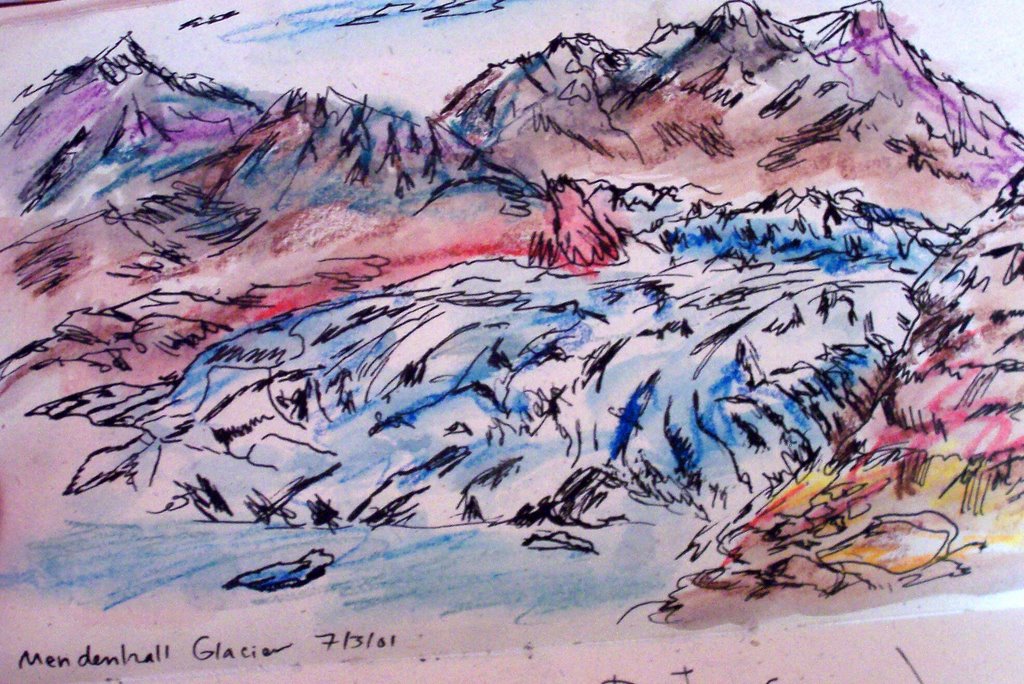
...many of the mountain glaciers I visited early in my lifetime will be gone by the end of it. Gone is the awing Illecillewaet that I viewed from a quiet perch at 19. The Eliot Glacier, a popular ski spot, a name on the map, the majestic Mendenhall a bowl in the valley. It is very sad to me at a gut level--- a loss of what is beautiful. But there are more serious consequences ... even dire... think of the people in the Himalayas reliant on glacial melt for water...extreme thirst, parched throats.

Or worse yet,- will West Antarctica (or more) melt?

Keep burning fossil fuels. Make some money now-
Don't think too hard about your beach house on the coast, you're rich you can always rebuild when the coast moves inland 100-1000 feet. And yet, business as usual is considered the easiest choice. Since the industrial revolution we have burned fossil fuel... raking in the dough. Economics will still exist if we move to other fuels....California has a huge economy and is by far more green than any other state.

And, yes I drive... feeling a bit ill thinking about it....but I can't say that I want the solution to take away the liberty we have in our economy...

I am writing letters in favor of a light rail system, buying local produce (less transport required for food--- no more kiwi fruit, and vow to only invest in companies with sustainable practices... and those at the forefront of energy efficient technology- nanotechnology looks especially profitable-)

We have added insulation to our house, installed low energy flourescent light bulbs, and have committed to making our future home 100% off the grid (we will have solar, and geothermal energy).

As a person who is educated in the consequences of increasing atmospheric carbon dioxide it is my duty to make decisions that reflect this. It is my hope that the public will join the scientific community to demand more efficient energy use and the weaning from fossil fuels.

Floods are instantaneous, but we do not instinctively connect them to climate change. The gradual raise of sea level, the change of climate (shifting agriculture, land practice) these happen too slowly for us to register, to connect with our current energy practices. I hope people are starting to feel the water on their toes like me. Because the water will be over our children's heads. If we had to drop them into the bottom of the pool now- would that make our energy choices easier?

Tuesday, March 14, 2006

Snow Snow Snow

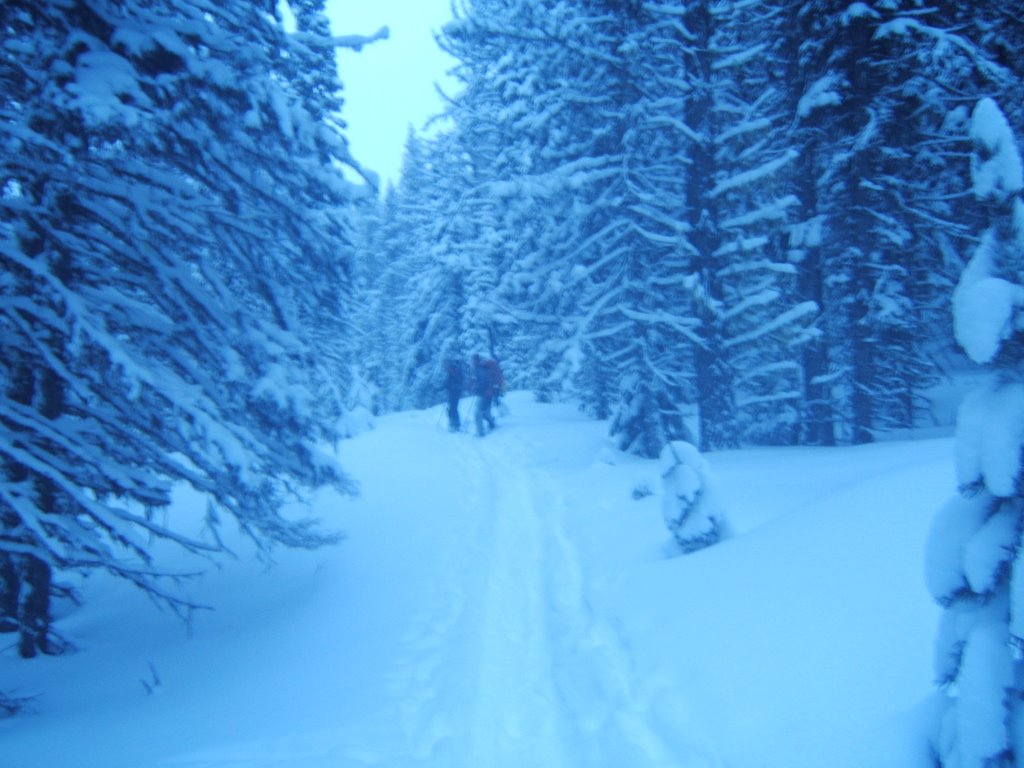
Hello all! Yesterday, I returned safely from this weekend's adventures on Mount Hood. Snowpit sampling and logistics were handled by a great team- Hiram Henry, Janelle Mueller, Jan Dougall, and Dave Dranchak (folks from Portland State University and/or former Juneau Icefield Participants). The goal- to resample just below my summer sampling location on Snowdome and compare the fresh snow trace metal signature to the melting summer snow (collected last June). We had plenty of snow- so much that I nearly cancelled the trip the day before... avalanches are a big concern in the Cascades this year with record snowfall---- the reports were ominous with avalanche warnings at moderate levels, it could get worse if the storms continued. Jan called the day before reporting snow in Portland (which rarely happens...) However, as the day continued the outlook improved and it looked like the Cooper Spur road to the trailhead would be plowed and avalanche hazards minimal- due to the relatively consistent nature of the snow...After waking up at 5 am in Columbus, I arrived in Portland at 11 a.m. We were skiing up Mount Hood toward the Tilly Jane Cabin by 5 p.m. Shovels, avalanche probes, beacons, and sampling equipment in tow. (Safety = Good Science) The uphill ski took us just under 5 hours. Fortunately, we did not have to break trail- earlier skiiers had paved the way to the cabin... and we were blessed to ski in the moonlight the whole evening. Hiram had his compass out just in case... The moon nearly full provided ample light and it was refreshing after 6 hours on the plane and a few hours of studying in the airport... we were in great spirits!
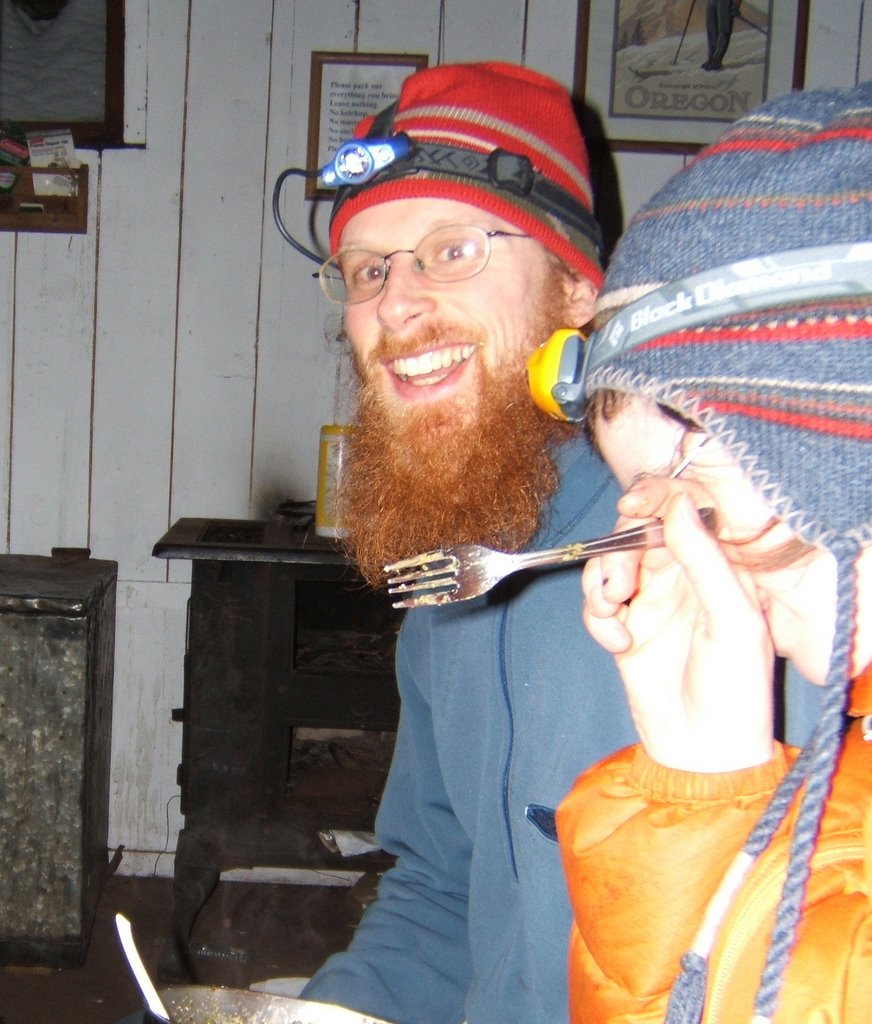
Arriving at the Tilly Jane Cabin felt great! I had been awake for nearly 20 hours, and skiing uphill with sampling and sleeping equipment isn't as easy as Hiram (an Alaskan native) makes it look. A group of backcountry skiiers and snowboaders had the wood burning stove blazing and we quickly settled into the rustic comfort. Dinners ranged from sandwiches to gourmet pasta dishes, depending on what people had packed in- but the generous snowboarders offered us all hot water for drinks and to fill our nalgenes for the next day's ski. After eating well, playing a round of cards, and laying out my thermarest in the loft above the kitchen area, I fell soundly to sleep nevermind the jungle of snoring snowboarders. A thermarest can feel like down if you are tired enough. We woke up slowly, to enjoy the morning, Dave even had a little metal espresso maker- but after eating, double-checking our equipment, and strapping on avalanche beacons (they are transmitters to aide rescue), we skiied uphill once more... heading above treeline to fresh undisturbed snow.

This didn't take long, we found a good fresh patch within two hours. By the time Dave, Jan, and Janelle and I had eaten our sandwiches, Hiram had dug a pit. (We all offered to help after eating, but Hiram was particularly enthusiastic). Before Jan and I put the clean suits on to avoid contaminating the pit with dust from our clothes- Hiram demonstrated how to check the safety of the snow by looking for inconsistent densities... I learned something new- I had no idea that depth hoare could form on temperate glaciers... depth hoare is snow that is less dense that its surrounding layers- (it forms on polar glaciers in areas of high sublimation)... Anyway, given the right radiation and wind conditions depth hoare may also form in temperate glaciers...

Both depth hoare and ice lenses (melted and refrozen snow) create instability in the snow, making easier planes for the snow to slip on--- luckily, our poking into the side of the snowpit revealed the snow was a relatively consitent density for at least the top meter. (This is something I had just been studying at home in Paterson for those glacier physics freaks).

Once we established the snow was safe, Hiram, Janelle and Dave went skiing nearby and Jan and I began sampling. The sampling went quickly with great snow conditions! Jan and I managed to finish sampling and pack up a half hour before the skiiers returned. By 4 p.m. we were skiing down the mountain, enjoying great snow conditions and samples! We stopped at the Tilly Jane to pack up the avalanche equipment and repack our sleeping gear. Then we headed down the mountain. Skiing felt wonderful, it was a bit tougher for me, having not telemarked in awhile, but I put skins on and had no difficulty skiing down with the extra friction--- Hiram skiied the best, even after his binding broke, at which point he strapped his useless ski on his pack and continued skiing on one foot easily through the woods...

Unfortunately, we overshot our cars and ended up just below the Cooper Spur Ski Resort. The sky darkened and in moonlight once more, we followed the road up 2 km to the vehicles. Seeing the cars brought smiles!

Thank goodness for Thai food. By the time we made it to Portland (10 pm) all of us were grateful that we could enjoy a warm meal together. I couldn't have asked for a better team. Not everybody would maintain such high spirits given the detours we had that day- but our team was excellent. Everyone focused on collecting samples, and logistics were well planned by the PSU crew. I am very happy to have had this experience with Hiram, Janelle, Jan, and Dave.

Sunday, January 22, 2006

The Fonz

Hi everyone, I made it safely back to Ohio- after a delay in Los Angeles... my flight to Chicago was cancelled due to snow. Thankfully, there is a distressed passenger rate at the Hilton- I had a nice afternoon reviving myself after the 12 hour flight from Auckland, New Zealand. My flight for Ohio via St. Louis left yesterday morning at 6:30, so I arrived at the airport to massive lines. People swarming like sluggish ants at 4:30 in the morning . Going through security- the Fonz and I had a good pre-caffeinated chat. He was heading to Dallas, Texas. Wearing a purple Mr. Rogers sweater with a fancy and flamboyant scarf.

The Fonz is a much smaller (width and height) and softer spoken man than I expected. After our 15 minute line wait, he grabbed my running shoes off the security for me through security and wished me a good flight. That's about as much as I remember at 5 in the morning after 24 hours of flying....

Heyyyyyyyyyy!

Wednesday, January 18, 2006

Need a Caddy?

There was an Antarctic driving contest recently... (see the greens- or rather blues of the Ross Sea Ice above) my golf bag would have come in handy after all. Too bad it is already on the ship. In the meantime, I've lugged all of my gear up the hill into the loading area for the plane tomorrow. I have one small bag to live on until our flight tomorrow... unless the flight is delayed in which case, people have been known to live on one small bag of personal effects for weeks. (Its more of a big purse...)Which is fine in the field... but strange in McMurdo Station, where I'm always in awe of the amount and variety of clothes people have here....from ball gowns to cowboy hats.

Some people live here for an entire year. The light sun of today replaced with complete and utter darkness. The kind that holes people up in buildings with gusting solitude. May I stay with the light.
(Below--- one last picture of Taylor Valley)

Monday, January 16, 2006

Mosses

Yesterday, my advisor-Berry Lyons, and I sampled the east side of the Canada Glacier--- a waterfall from the glacier, and the Canada Stream (the stream along the glacier margin). We caught a helicopter from Lake Hoare and flew over the glacier landing a safe distance from the stream

We had a special permit to sample this area, as it is restricted--- unusual mosses line the stream -----many species in a suite of colors. This makes the area very unique ecologically. We had to walk as nimbly as possible, and jump from rock to rock to avoid mosses and algal matts. I am excited to see if the mosses are taking up metals as the stream moves off the glacier. (And also if the geochemistry of the glacier surface reflects wind blown mosses and matts). It was a pleasure to sample with Berry, given his experience in the Valleys and his insights. We navigated the stream margin to find a safe place to sample and not injure the matts. The soil near the stream is saturated, a hyphoreic zone, where the ice surrounding the stream has thawed in the summer warmth. If you aren't careful, you can sink coating your boots in ooze.

Over the radio we listened to Diane McKnight and Karen Cosseto's field parties sample a nearby river in a neatly orchestrated tracer experiment--- with many people involved and sampling every 15 minutes for 24 hours. We had a much more relaxed experience--- although, hopefully, all of our parties end up with excellent data.

After sampling, we caught a 40 minute helicopter flight back into McMurdo. The pilot, Scotty, joked asking if I had a good round of golf while I was in the valleys. My husband's golf bag was neatly packed with equipment. Golf aside, we flew into McMurdo in the shadow of Mount Erebus, the largest active volcanoe in Antarctica. The clouds covered the cauldera making it seem much more subdued than it usually seems, a slim puff of smoke hangs in clear horizons. Now I'm packing samples and equipment up. The cargo vessel has not arrived yet, but is due any day. I will ship out over 70 lbs--- which won't make it to Columbus, Ohio until May. I will have time to write a few fellowship applications and get out to Mount Hood again in March for some sampling on the Eliot Glacier. For now, I am going to head to Scott Base and walk up Observation Hill. Enjoying the calm weather we have in McMurdo.